How fibre lasers handle different metals and coatings
Mild steel is the most common stock on CutLine cells. Oxygen assist gas helps the cut but leaves an oxide edge, which should be removed before painting or powder coating. Nitrogen gives a cleaner edge but uses more gas. Stainless steel, especially grades 304 and 316, needs nitrogen for a bright, oxide-free finish. In food, medical or marine work, 316 resists corrosion better thanks to its molybdenum content.
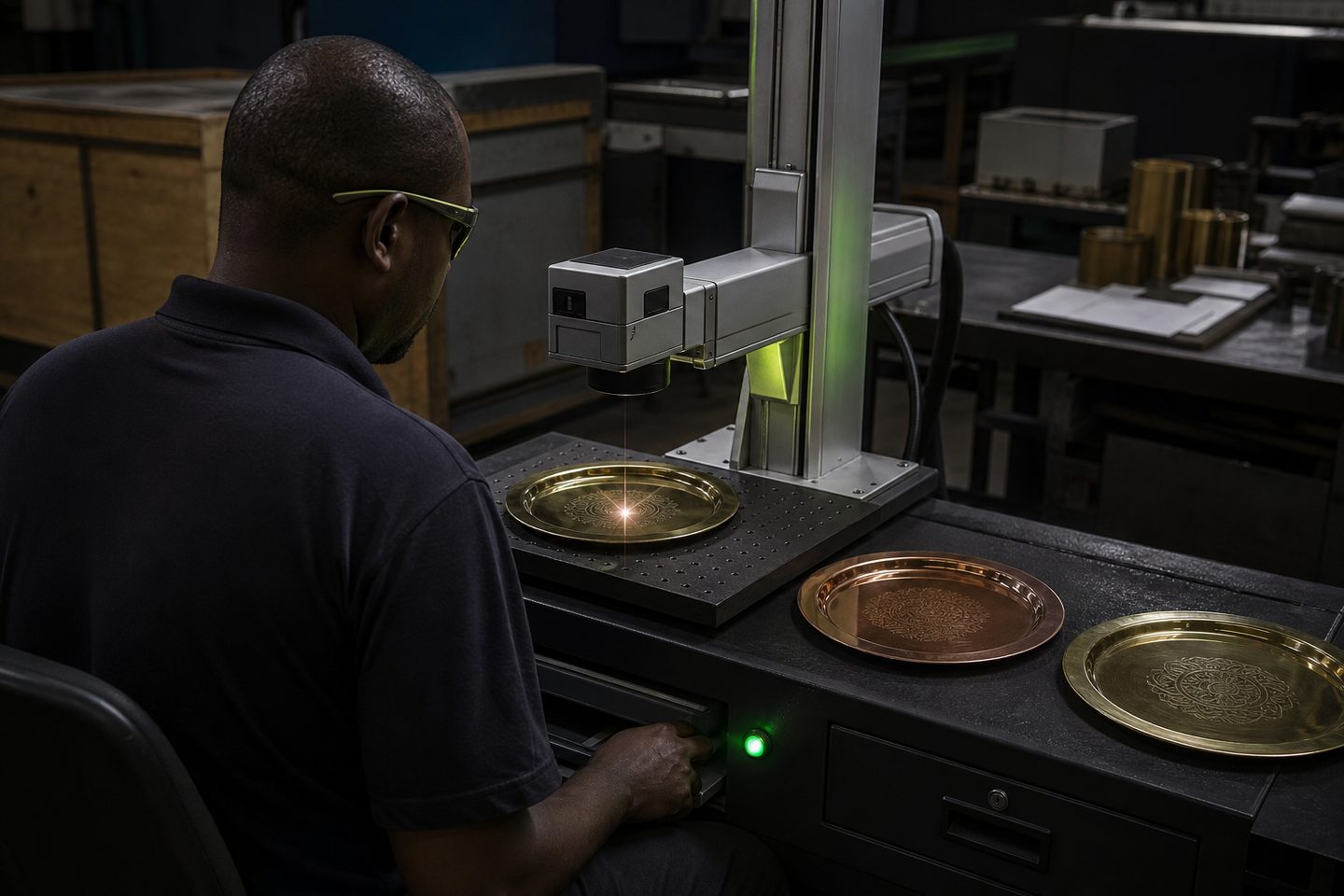
Aluminium, brass and copper reflect the laser more than steel, so settings must be tuned for each. Fibre lasers are much better at reflective metals than CO2 types, but make sure your protective window is clean and undamaged. With aluminium, use nitrogen for a clean edge. Brass and copper need the right power and focus to prevent spatter or incomplete cuts.
Painted, coated or anodised stock poses special challenges. For cutting, only the base metal matters, but marking often means ablation: removing a coating to show contrast. Never try to cut or mark PVC-coated sheet, as this gives off corrosive and harmful fumes.
Stock tips for tubes, thick plate and specialist alloys
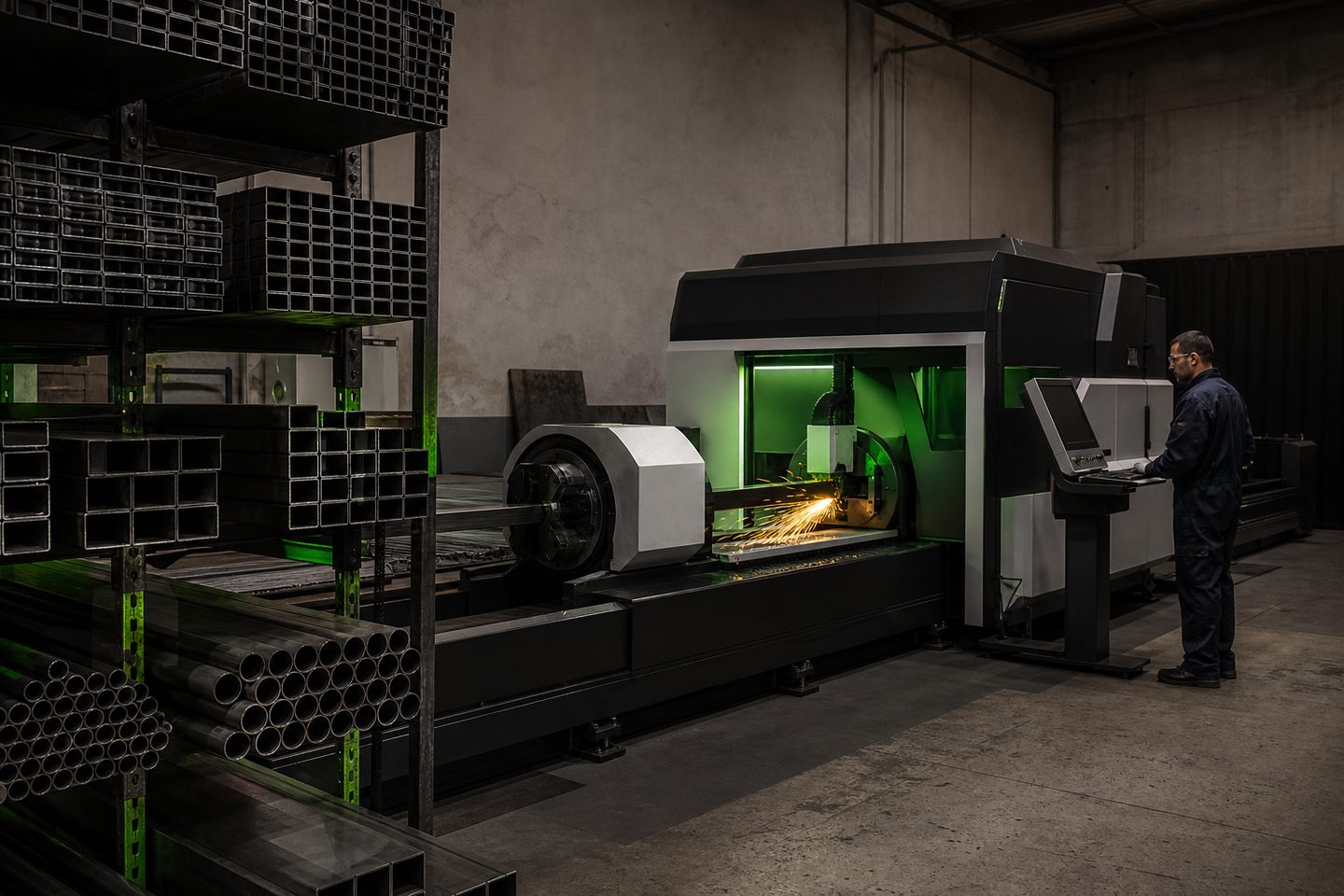
TubeCut R8 makes light work of RHS, round or oval tube. Keep profiles straight and free of mill scale, and check that clamps have a solid grip before starting. For thick plate or wear plate, PlateGate XL with high-pressure nitrogen or oxygen is the tool of choice, but mind the pierce window: entry points on thick stock need correct timing to avoid dross or spatter.
Tool steels and die materials demand precise focus and assist gas. Deep marking (as on EngraveFab 50) works well for dies and inserts, but always run a test pass to dial in depth and clarity. Thin electronics stock, like covers and chassis, may warp under heat, so use a fine nest and tight holding.
Sample Parts First For Accurate Settings
Material batches vary, and so do coatings or surface treatments. We recommend sending your own stock for first-article cutting or marking, so we can tune the process to your exact needs. At Sunnyrock HQ, Ms Kelebogile Nxumalo runs these reviews, checking for edge quality, marking contrast, and any heat or warping concerns.
Testing with your actual stock also helps get the right assist gas and settings from the start, which cuts down on rework and surprises in production. If you have a new alloy or finish, let us know: we can advise on handling and compliance with OHS and environmental rules.
- Send your own batch for a process test
- Check edges, marks and fit to coating plan
- Let us know about any special alloys or treatments