Material
RHS and pipe
Fibre lasers handle RHS, pipe and oval tube efficiently, but correct clamping and rotation setup is key for precise, safe processing.
Material behaviour under fibre laser cutting and marking
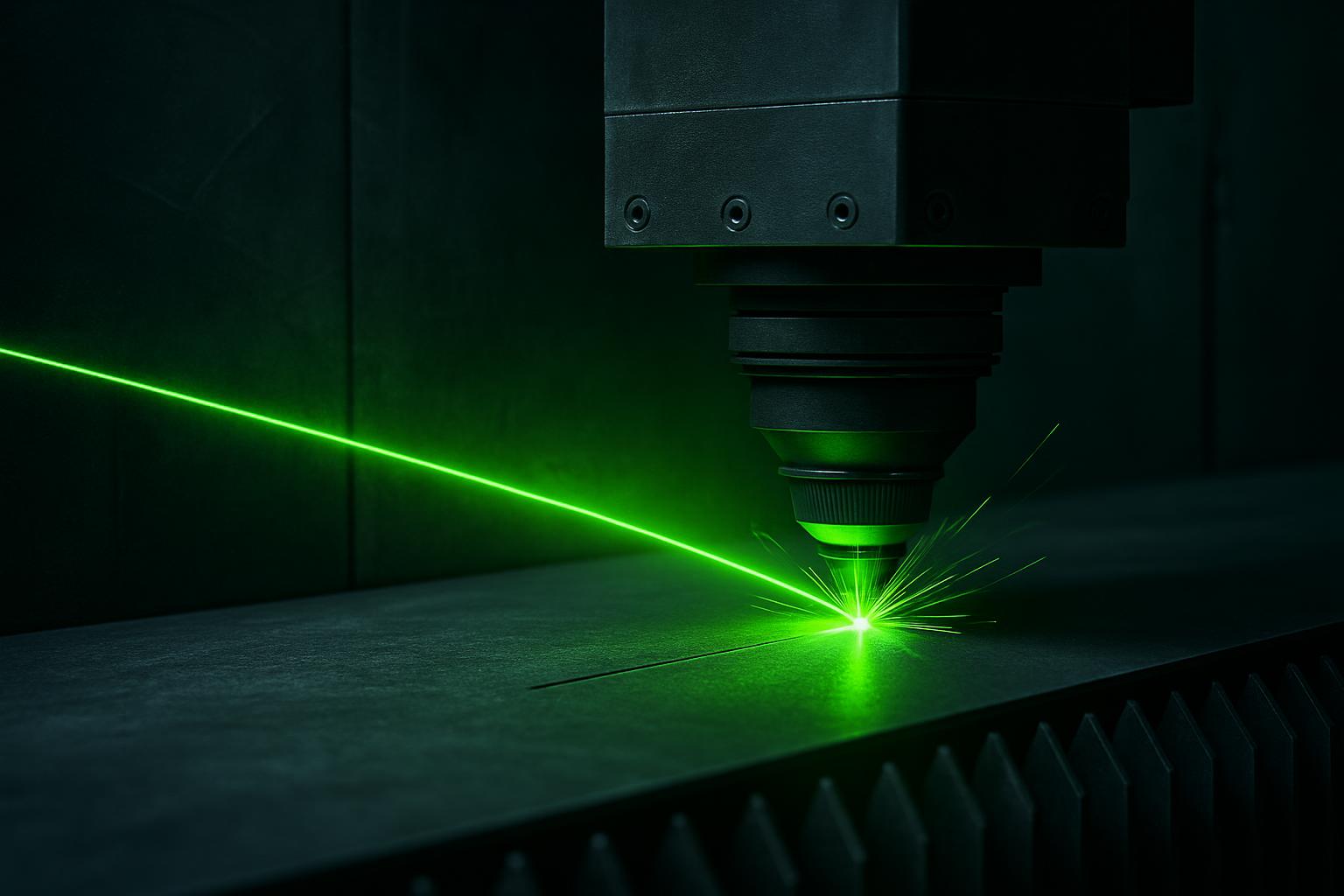
RHS (rectangular hollow section), round pipe and oval tubes respond well to fibre laser cutting, with cleaner entry and minimal burr compared to CO2 lasers. The near-infrared wavelength at 1064 to 1080 nm couples energy efficiently into steel, stainless and aluminium. Marking is crisp, but reflective finishes on aluminium or polished tube may require cleaning or masking to avoid beam scatter or spatter.
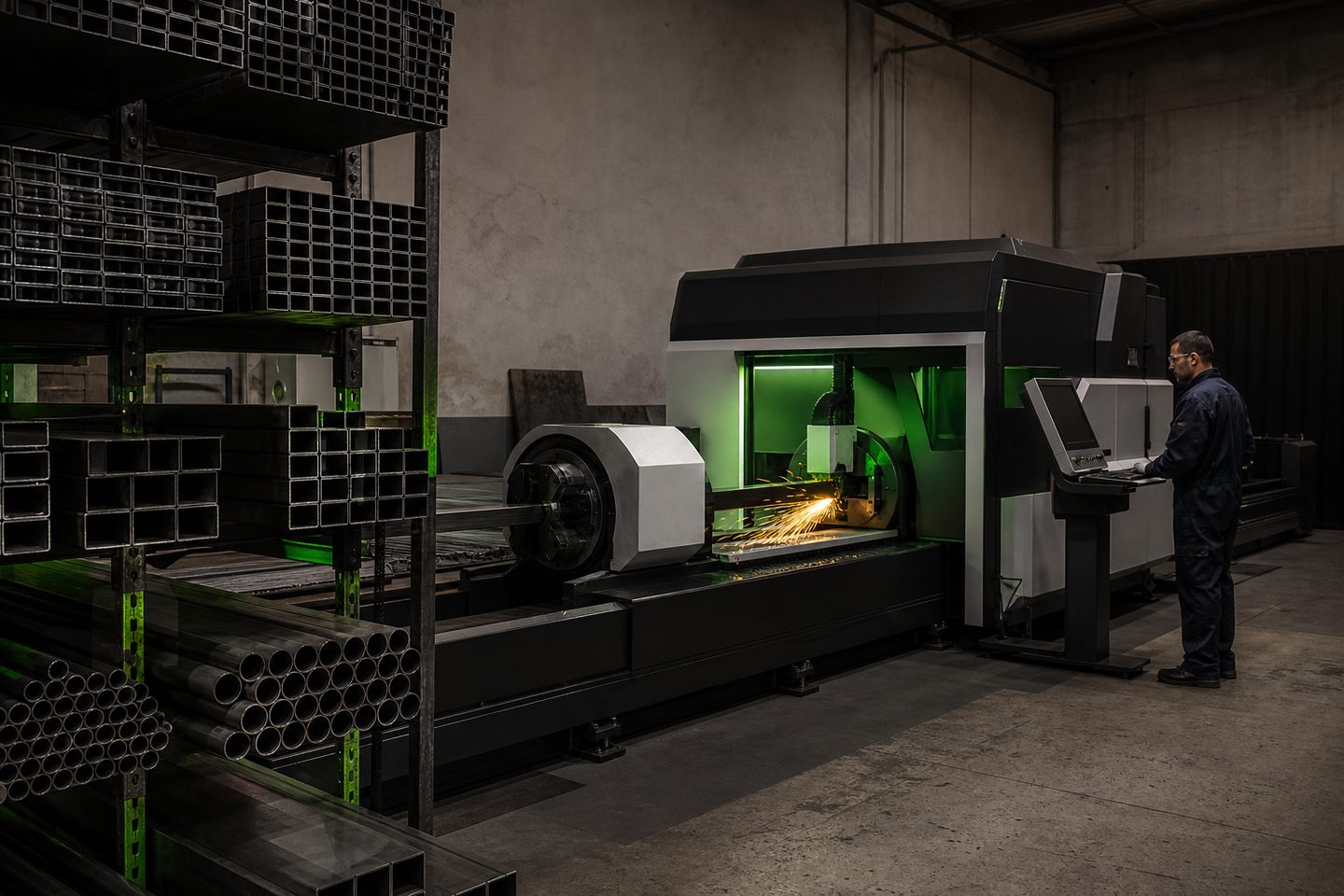
On tube and RHS, a rotary axis keeps the profile turning smoothly under the cutting or marking head. Any slack or poor clamping creates vibration or ovality, affecting cut quality and registration. For deep engraving or high-contrast marking on steel or stainless, stable fixturing is essential to avoid misalignment and double images.
Assist gas and marking method choices
For cutting mild steel RHS and pipe, oxygen as an assist gas enables faster cutting and helps with thicker walls, but leaves an oxide layer. This oxide needs to be removed before any later painting or powder coating. For stainless or aluminium, use nitrogen for a bright, oxide-free cut edge. Aluminium, even on tube, can reflect more beam energy than flat sheet, so double-check the head’s protective window and set airflow to keep it clear.
Marking on tube and pipe is usually done by engraving (removing material) or by annealing, which changes the surface colour on stainless. Direct part marking of codes or serials on curved surfaces works well if the rotation is set up correctly. For thin-wall electronics, use minimum power and keep pulse overlap tight to avoid distortion.
Preparation, storage and handling for South African conditions
Dust, humidity and surface condition affect results, especially for coastal or Highveld workshops. Store pipe and RHS under cover, off the floor with airflow, and keep them dry to prevent rust and pitting, which can spoil cutting or marking quality.
Remove oil, drawing compounds, and any visible corrosion before loading profiles into the TubeCut R8 cell. Wipe down stainless profiles, especially near the coast, to remove salt residues. For painted or coated tube, use ablation settings and check fume extraction. Always secure gas cylinders and check for leaks before starting.
- Store profiles off the ground, covered and dry
- Wipe stainless tube before marking or cutting
- Remove surface oil and rust before loading
- Check clamps and rotary chucks for play
- Inspect the cutting head window daily
Systems and the value of a sample run
The TubeCut R8 cell is optimised for rotating and cutting RHS, pipe and oval profiles with fibre laser precision. For chassis work, production runs or custom signage, Ms Busisiwe Ngqula can review your drawings and sample profiles at Sunnyrock HQ before you commit.
Doing a first-article test on your own material confirms the correct fixturing, gas, marking or cutting settings, and lets you check edge or mark quality on your actual stock. This also helps with site licence paperwork and safety planning required by Radiation Control.
What our Fibre Laser customers say
Verified Google reviews