Material
Aluminium sheet
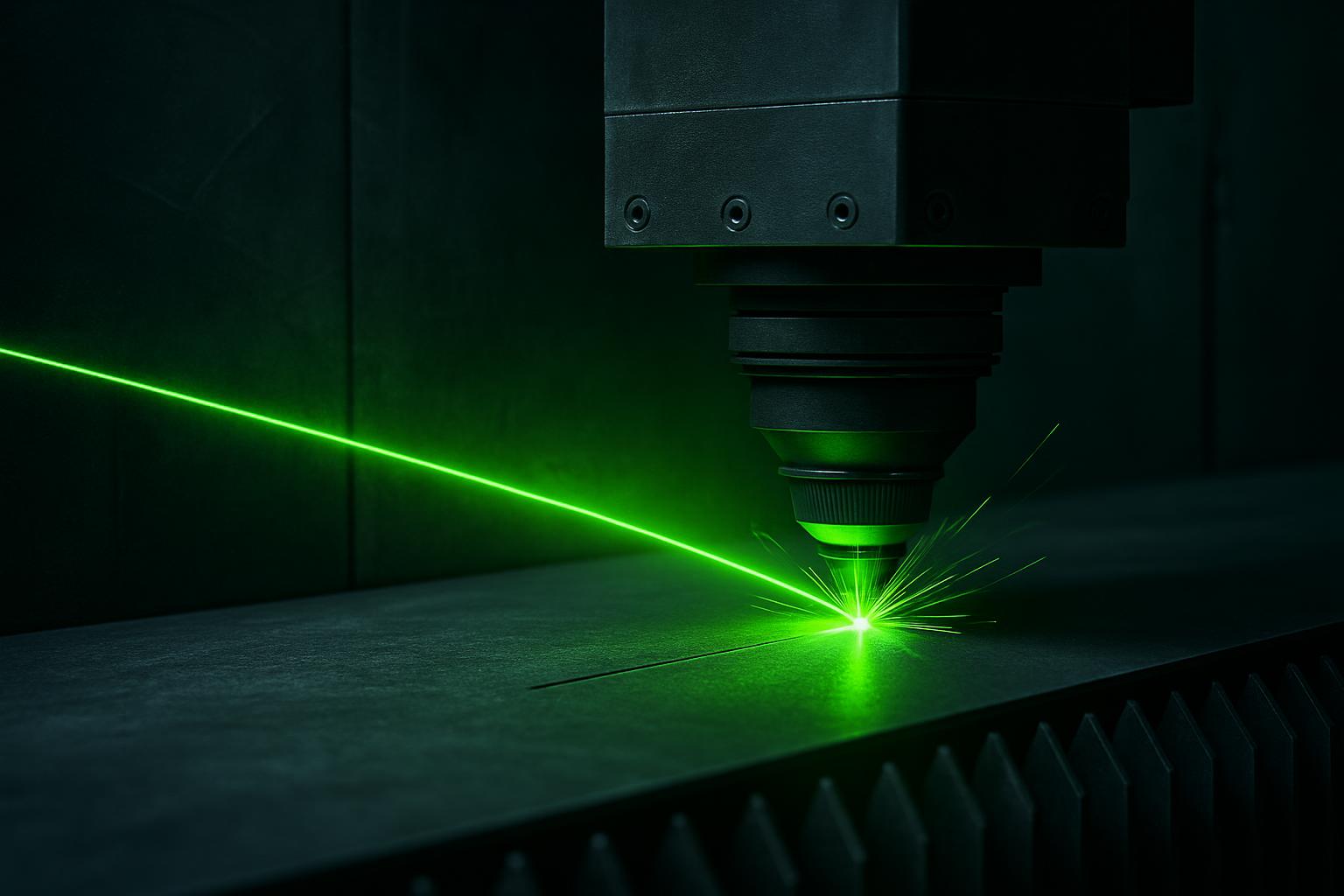
Aluminium reflects strongly in the near-infrared, so fibre lasers handle it better than older CO2 types. The right settings and gas give clean, burr-free cuts.
How aluminium behaves under fibre lasers
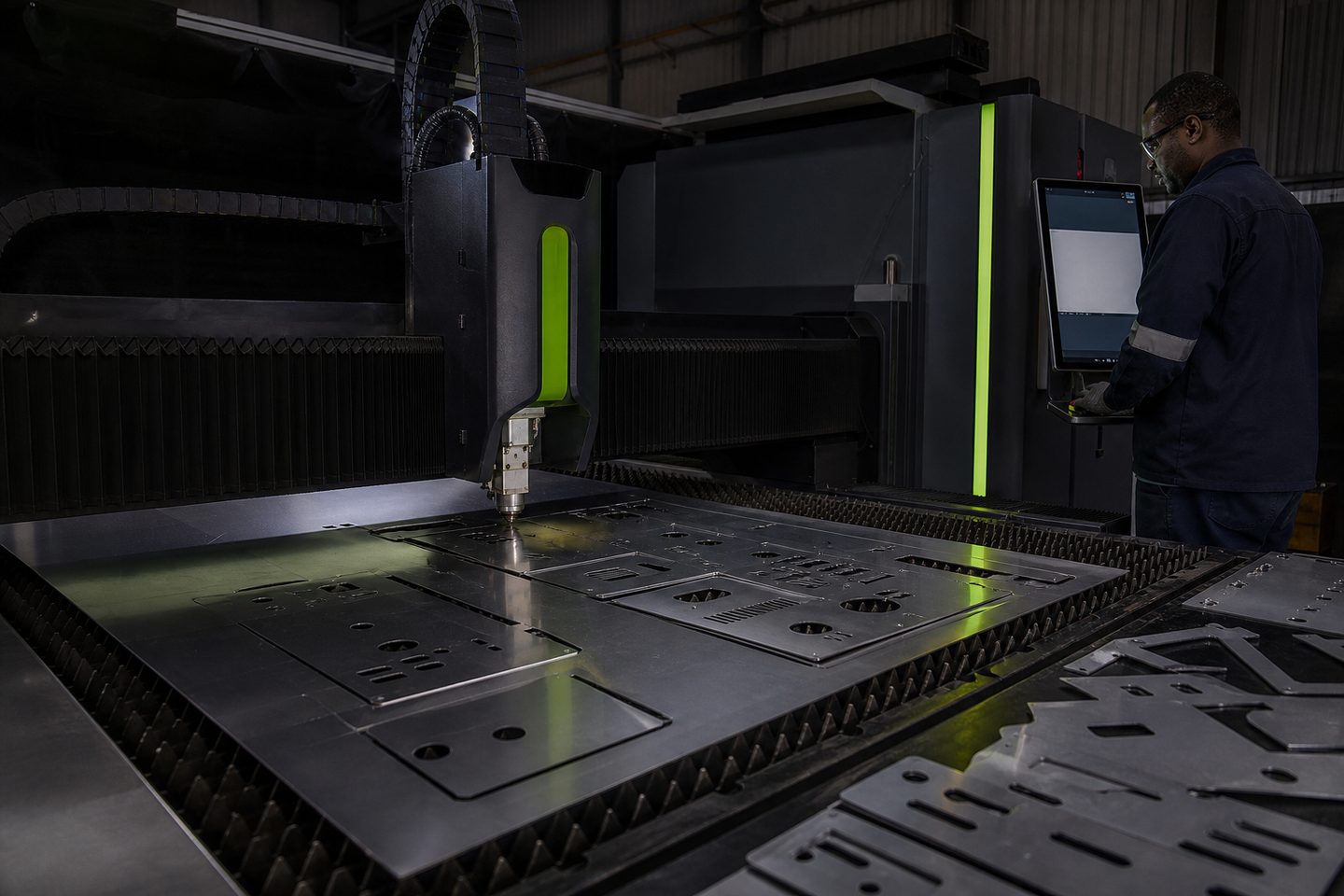
Aluminium is highly reflective at the fibre laser’s working wavelength, but modern sources can cut and mark it with good consistency. It needs a clean, stable beam and careful power setting, as reflected energy can bounce back into the head if optics aren’t kept spotless.
For marking, aluminium’s reflectivity means some marks can be less visible than on steel, especially on bare or mirror-finish sheet. Black or dark marks need dialled-in settings, while engraving removes top material to give more contrast on light alloys.
Choosing assist gas and mark methods
Use high-pressure nitrogen for shiny, oxide-free cut edges on aluminium. Compressed air works for thinner sheet and keeps running costs down, as long as the air is dry and oil-free. Oxygen isn’t used on aluminium because it forms a dull, rough edge and can overheat the cut zone.
For deep marking or engraving, keep the focus tight and use multiple passes if needed. Annealing is less effective because aluminium doesn’t develop strong oxide colours like stainless. Ablation (removing anodised or painted layers) is another option for clear, crisp marks.
Preparing, storing and handling aluminium sheet
South African humidity, dust and salt can quickly affect aluminium. Store sheets indoors, flat and clean, to prevent warping or corrosion. Handle with gloves to avoid fingerprints, and keep the surface dry to prevent staining.
Don’t stack coated and bare sheet together as coatings can scratch. If you’re running a job near the KZN or Western Cape coast, keep an eye on condensation, especially if chilled water lines run below the dew point. A slip in wiping or storage can show up as marks or poor cuts.
- Store flat and dry, away from direct rain or dust
- Use gloves to avoid fingerprints and corrosion
- Separate coated from bare sheets
- Check for condensation in humid weather
- Wipe down before loading to remove grit
Best-fit systems for aluminium sheet work
The CutLine 1500 is our main system for aluminium sheet cutting, with the right head and gas setup for consistent results. Pair it with SheetNest Pro for efficient nesting and minimum waste, or AutoFeed Cut for handling bigger batches.
For marking, the Mark Pro 30 and BeamDesk Mini both handle aluminium parts and data plates. If your job needs deeper engraving or ablation, the EngraveFab 50 gives more punch. We always cut or mark your own sample first at Sunnyrock, so you see the real edge or mark before production starts.
What our Fibre Laser customers say
Verified Google reviews