Material
Thick plate
Fibre lasers handle thick plate differently from older cutting tech. Getting the edge, pierce window and bevel right is critical for quality and downstream work.
Cutting and marking thick plate under fibre
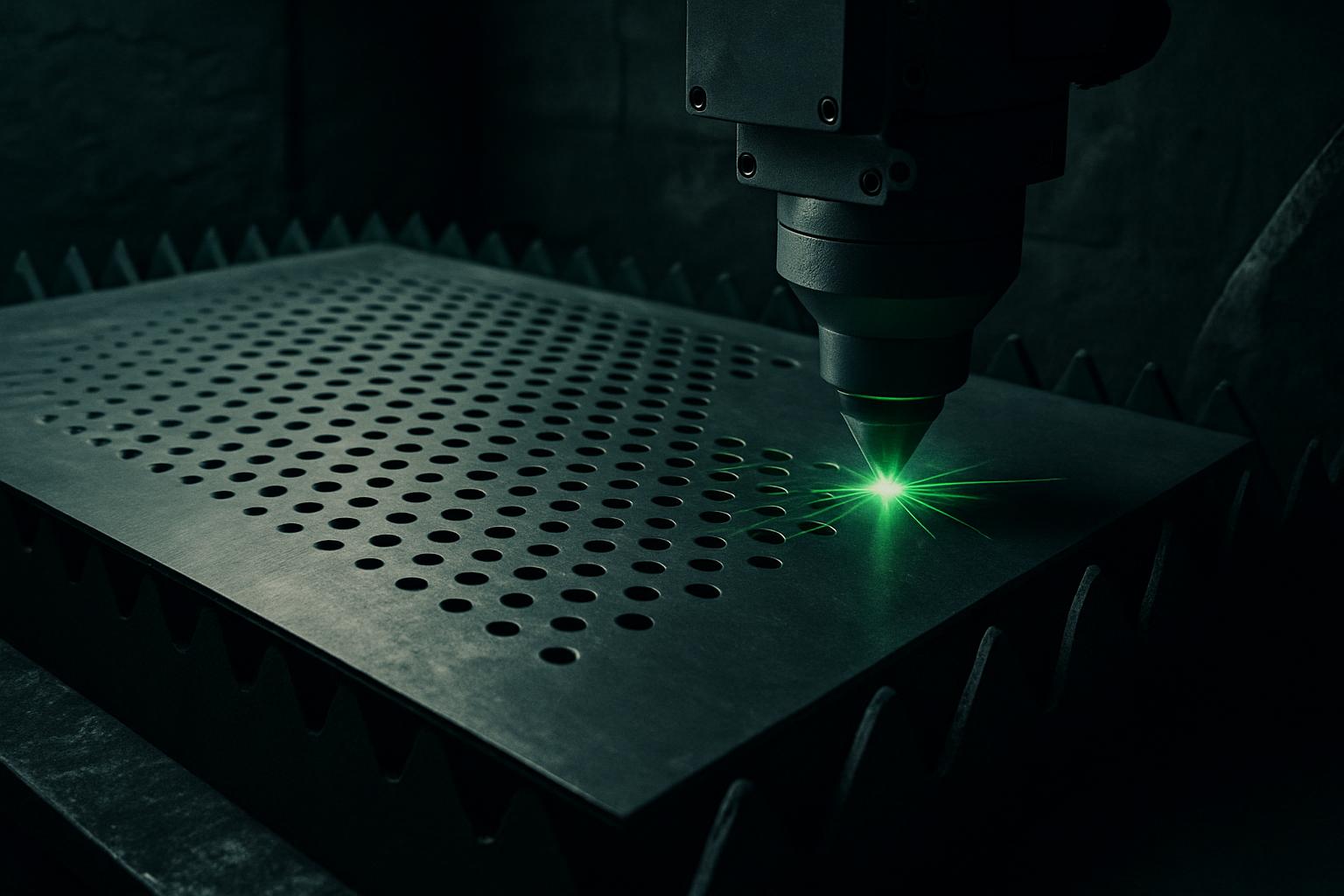
Thick plate absorbs more energy and reflects less than thin sheet, but cutting it on a fibre laser has unique challenges. The initial pierce takes longer and creates more spatter, which can stick to the surface or nozzle if not controlled with proper settings and shielding gas. Heat input is higher, so edges can overheat if speed or focus is wrong.
Marking on thick plate works well for deep, permanent identification or part numbers. The surface finish and alloy matter: rough or mill-scale surfaces scatter the beam and reduce mark contrast, so prep is often needed. Annealing marks are possible on stainless, but most thick plate marks will be engraved for visibility and wear resistance.
Assist gas, mark types and edge results
For thick mild steel, oxygen is the usual assist gas. It supports the exothermic reaction that helps cut thicker sections, but leaves an oxide layer on the edge. This layer is tough but should be removed before any painting or powder coating. Nitrogen gives a cleaner, brighter edge on stainless and aluminium, preventing oxide build-up, but the gas usage and pressure are much higher.
If you need high-contrast marks, deep engraving is preferred as surface marks can be hard to see after handling. For Data Matrix codes and serials, our marking cells can engrave directly into thick plate and grade the results under ISO/IEC TR 29158, ensuring downstream readability even if the plate is bead-blasted or painted later.
Preparation, storage and handling advice
South African conditions bring real challenges to plate storage and prep. Surface contamination, rust and condensation can all affect the laser process and final edge. Always inspect stock for mill scale, rust, paint or oil film before loading it onto the cutting cell. Store plate indoors and off the floor to prevent damp and dust accumulation.
Before cutting, wipe or degrease the plate, especially around pierce points. For stainless, use a dedicated wipe to avoid cross-contamination. On the Highveld, dust can clog filters and settle on plate stock. Coastal yards need to monitor for salt and moisture that speed up corrosion, especially on 304 stainless.
- Inspect and clean plate before cutting
- Store indoors, off the floor and covered
- Check for condensation or rust, especially near coast
- Use local exhaust extraction for fumes
- Never laser PVC-coated plate
Systems for thick plate and why sample cuts matter
PlateGate XL is our dedicated system for thick plate jobs: it offers a larger bed, strong extraction and precise control over the pierce window and edge prep. For specialist weld prep, WeldPrep Beam bevels and chamfers edges ready for fabrication, minimising manual grinding.
We always recommend cutting or marking your own material sample at Sunnyrock HQ before full production. This lets us fine-tune settings for your steel grade, thickness and downstream requirements. Our applications team, led by Mr Neels Jansen, reviews the edge, oxide layer and mark quality so you start with a working recipe for your real jobs.
What our Fibre Laser customers say
Verified Google reviews