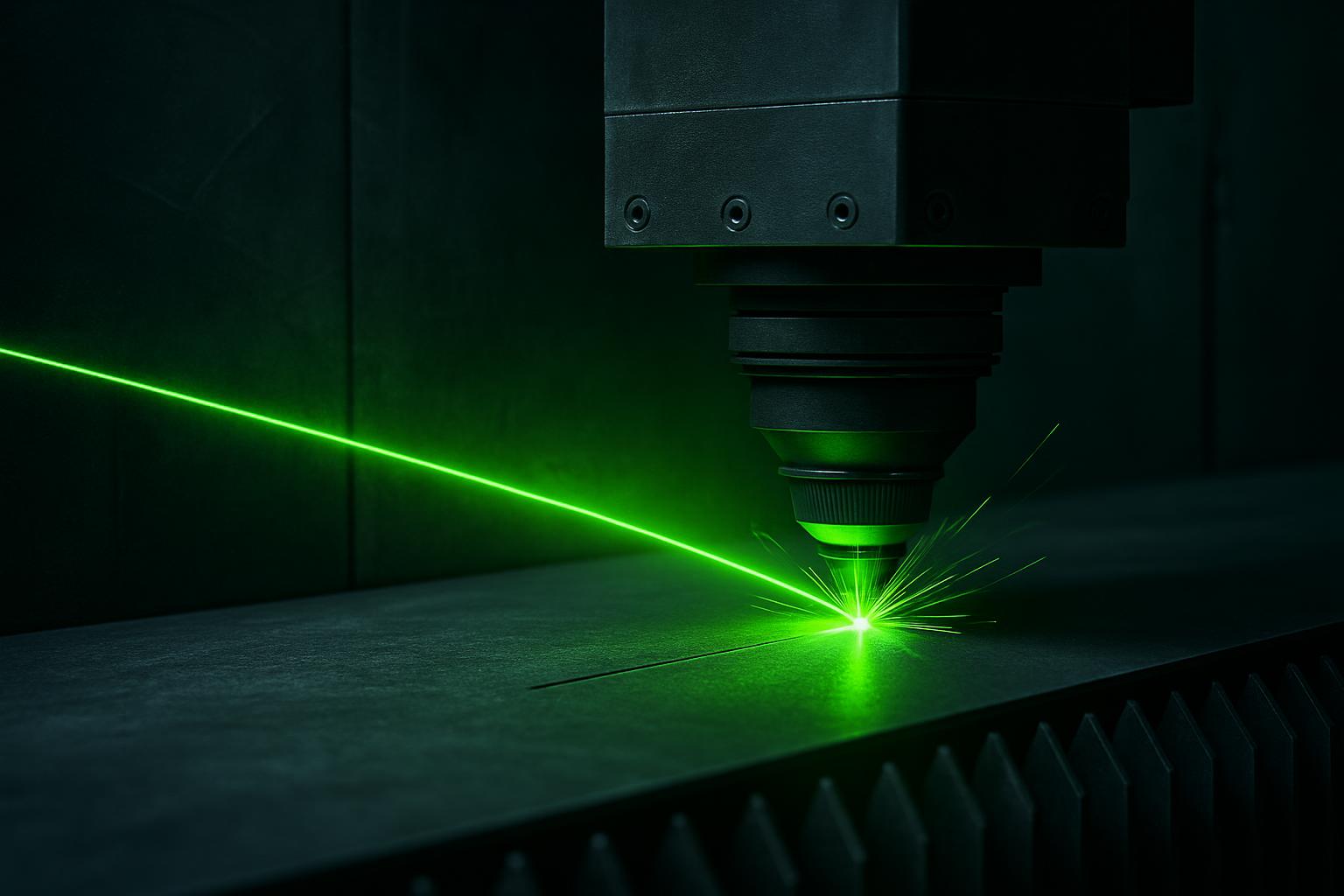
Precision micro
MicroMark Lab
MicroMark Lab handles the finest detail in fibre laser marking for medical, electronics and jewellery work. It delivers clean, high-contrast micro characters where accuracy is critical.
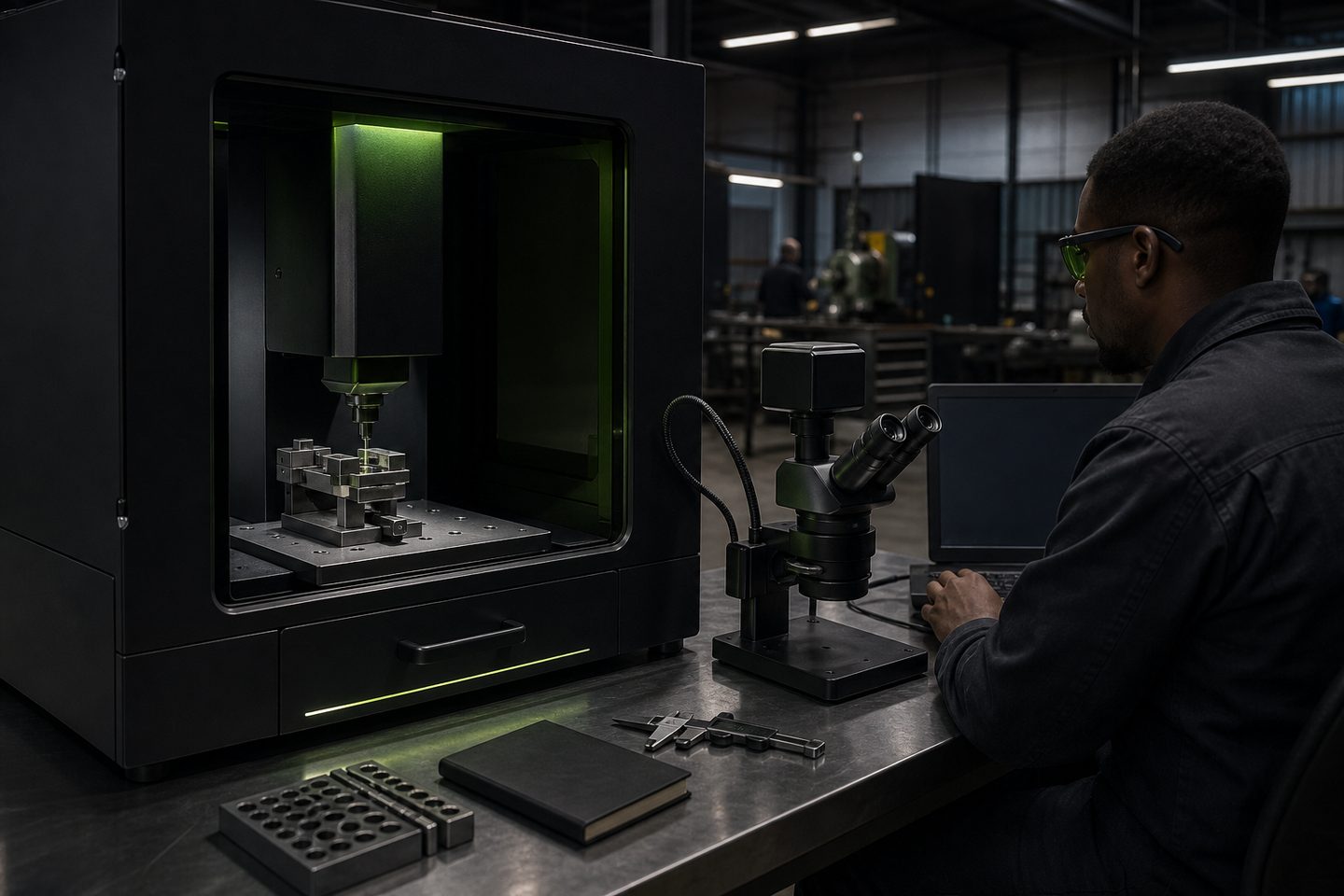
MicroMark Lab For Bench Top Marking
- Fine character recipes
- Contrast checks under loupe
- Cleanroom-adjacent habits
- Medical and jewellery cues
| Feature | Micro characters |
|---|---|
| Contrast | Loupe QA |
| Best for | Medical / electronics |
| Env | Clean bench notes |
| Fixtures | Micro jaws |
| Support | Showroom bays and Sunnyrock HQ |
Purpose-built for fine-feature marking
MicroMark Lab is our specialist system for ultra-fine fibre laser marking. It is designed specifically for applications where character height, line width and contrast must hold under magnification, such as surgical instruments, circuit board components and jewellery items.
This system is not a general-purpose marker. Its focus is micro characters and legible codes on small, high-specification parts. It suits QA processes that require every feature to check out under a loupe or digital scope. If your work needs serial numbers, logos or Data Matrix codes under 1 mm tall, this is the right tool.
Typical users include medical device makers, electronics labs, and jewellery studios where precise, permanent identification matters and surface finish must be controlled.
Consistent results on the bench
On the floor, MicroMark Lab delivers stable, repeatable marking at the scale where most fibre lasers struggle. The system works best when set up on a clean bench with good lighting and a stable power supply. Fixture jaws hold tiny parts steady, avoiding vibration and double imaging on fine features.
The laser’s parameters are tuned for micro character formation and contrast, making it easy to dial in settings for annealing marks on stainless, shallow engraving or ablation of coatings. QA is practical: you can check mark quality under a loupe right at the cell, with recipes proven for medical and electronics grades.
Routine use means short, clear recipes for each part, with notes on focus, fixture and contrast. This keeps floor output consistent and helps with traceability where regulatory or customer audits are a factor.
When to choose MicroMark Lab
Choose MicroMark Lab if your parts demand fine, permanent marks that stay legible even under magnification. It is the right fit for strict quality requirements in medical, electronics, laboratory and jewellery work.
For general fabrication, large items, or deep engraving beyond the micro scale, one of our other marking systems such as Mark Pro 30 or EngraveFab 50 will be a better match. For continuous high-volume marking on production lines, DualHead Mark or FieldMark Portable might suit better.
If you are unsure, our applications team can review your sample parts and recommend the best system for your needs.
Site requirements and safety for micro marking
MicroMark Lab is a Class 4 open-frame marking system, so operator safety is critical. The beam is invisible in the near infrared (around 1064 to 1080 nm) and can cause permanent eye injury or skin burns. Always use laser safety eyewear rated for fibre wavelengths. CO2 laser glasses do not protect against this beam.
Laser marking produces fine particulate and metal fume. Use local exhaust extraction with suitable filtration, especially with stainless, anodised materials or coated parts. Never mark PVC, as it releases harmful gases.
The system runs on 230 V single phase and does not need a large chiller, but ensure stable, clean power and surge protection. You may need a use licence from SAHPRA Radiation Control, as fibre lasers are Group III listed and regulated under the Hazardous Substances Act.
What to send us for a quote or test mark
To help us quote or provide a marking sample, please send us the following details using our contact form or by booking a visit to Sunnyrock or your nearest showroom bay.
If you have a unique material or a strict marking spec for medical or electronics work, our applications team can advise on fixture, mark style and contrast recipes.
- Material type and grade or alloy
- Typical part size and thickness
- Minimum character height and code format
- Required mark depth or contrast (if specified)
- Any special QA, regulatory or cleaning requirements
- A drawing or photo of the part if available
Related pages
Cuts & beam notes
What our Fibre Laser customers say
Verified Google reviews