Cut
Serial marking
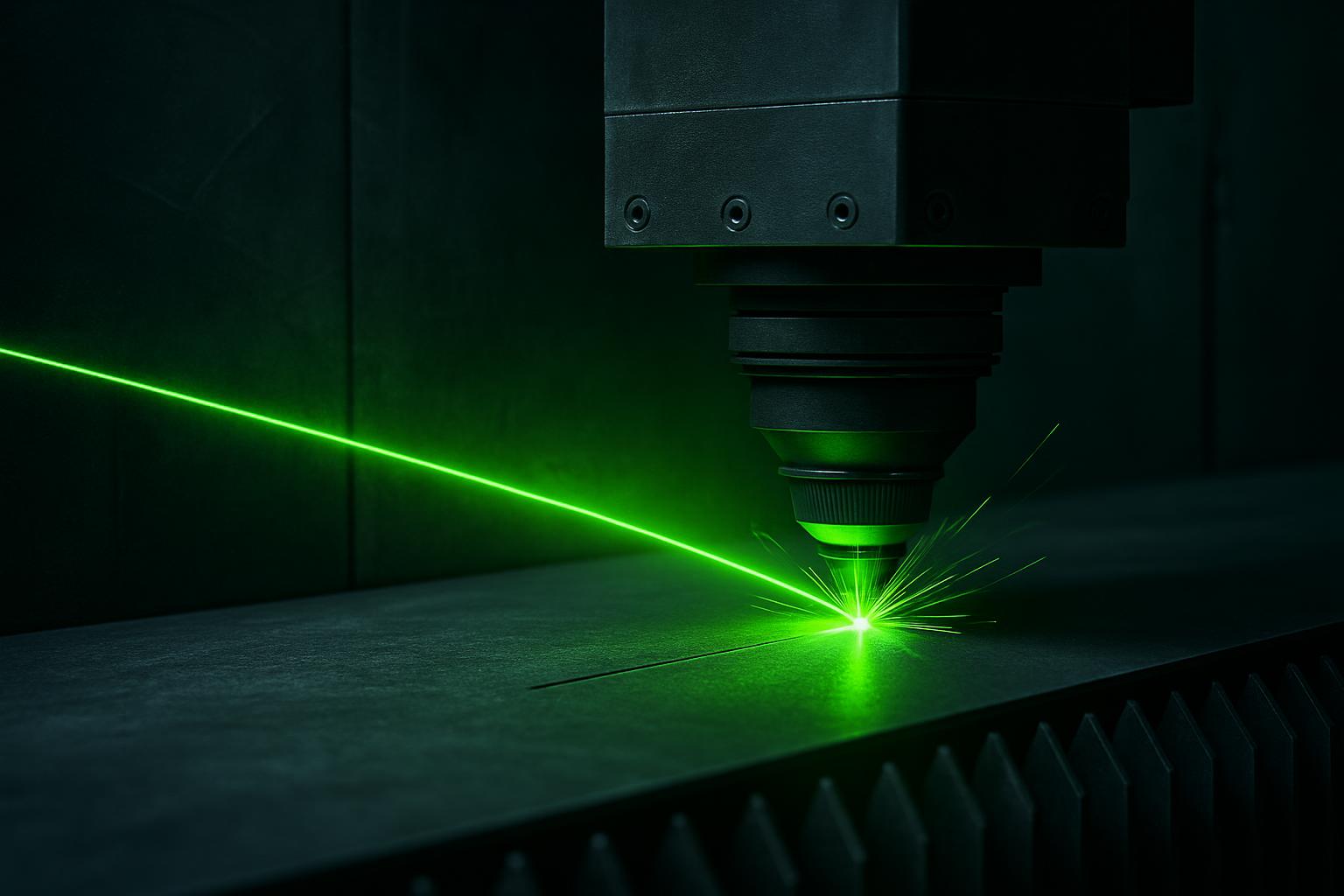
Serial marking with fibre lasers gives you UID, QR and serials that stay readable after powder coating, wash cycles, and tough South African conditions. We set up the right mark quality for long-term traceability.
Systems
Start with these systems
Fibre marking
Mark Pro 30
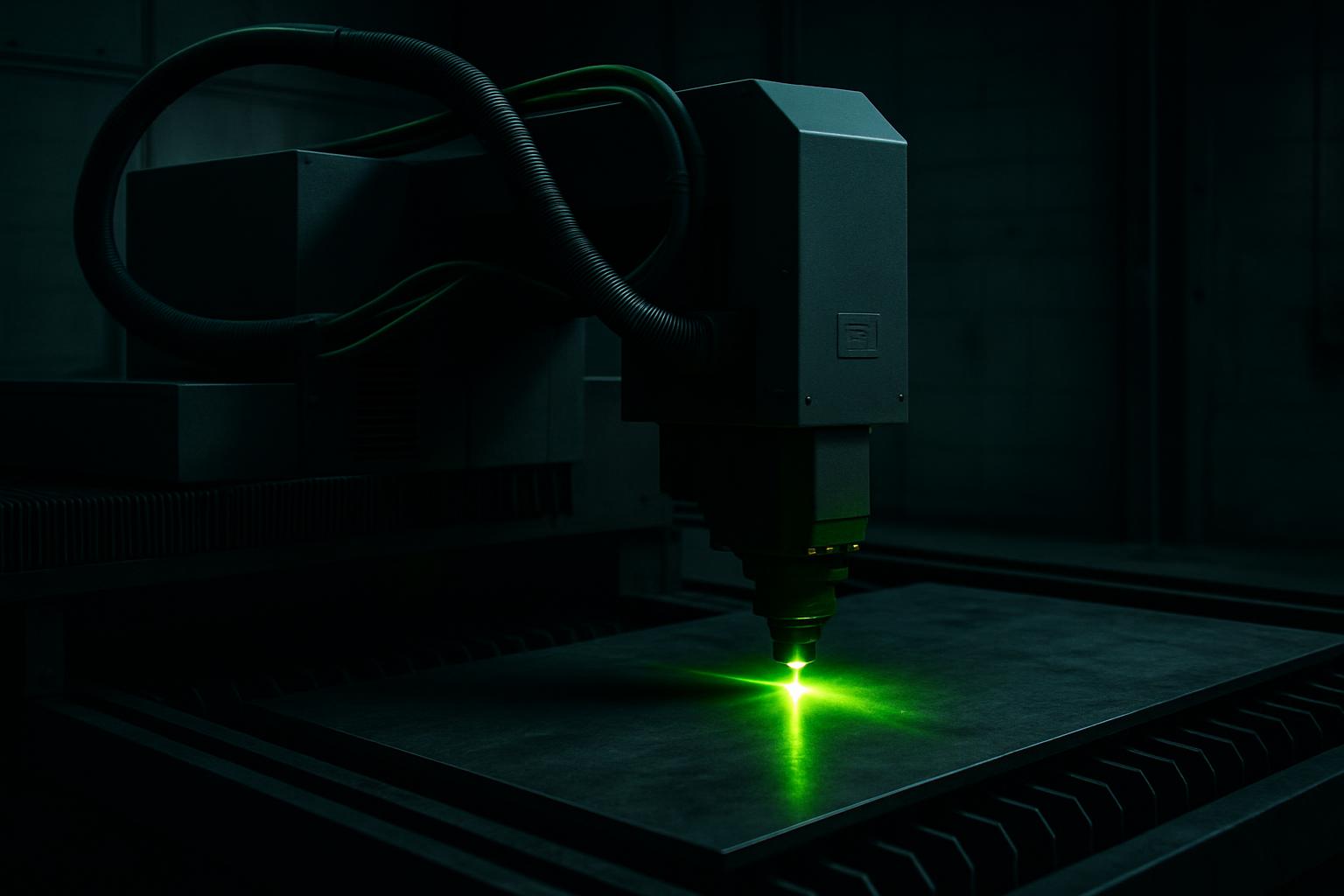
A compact fibre marking cell for durable serials, logos, and part identification on SA job-shop steel.
Explore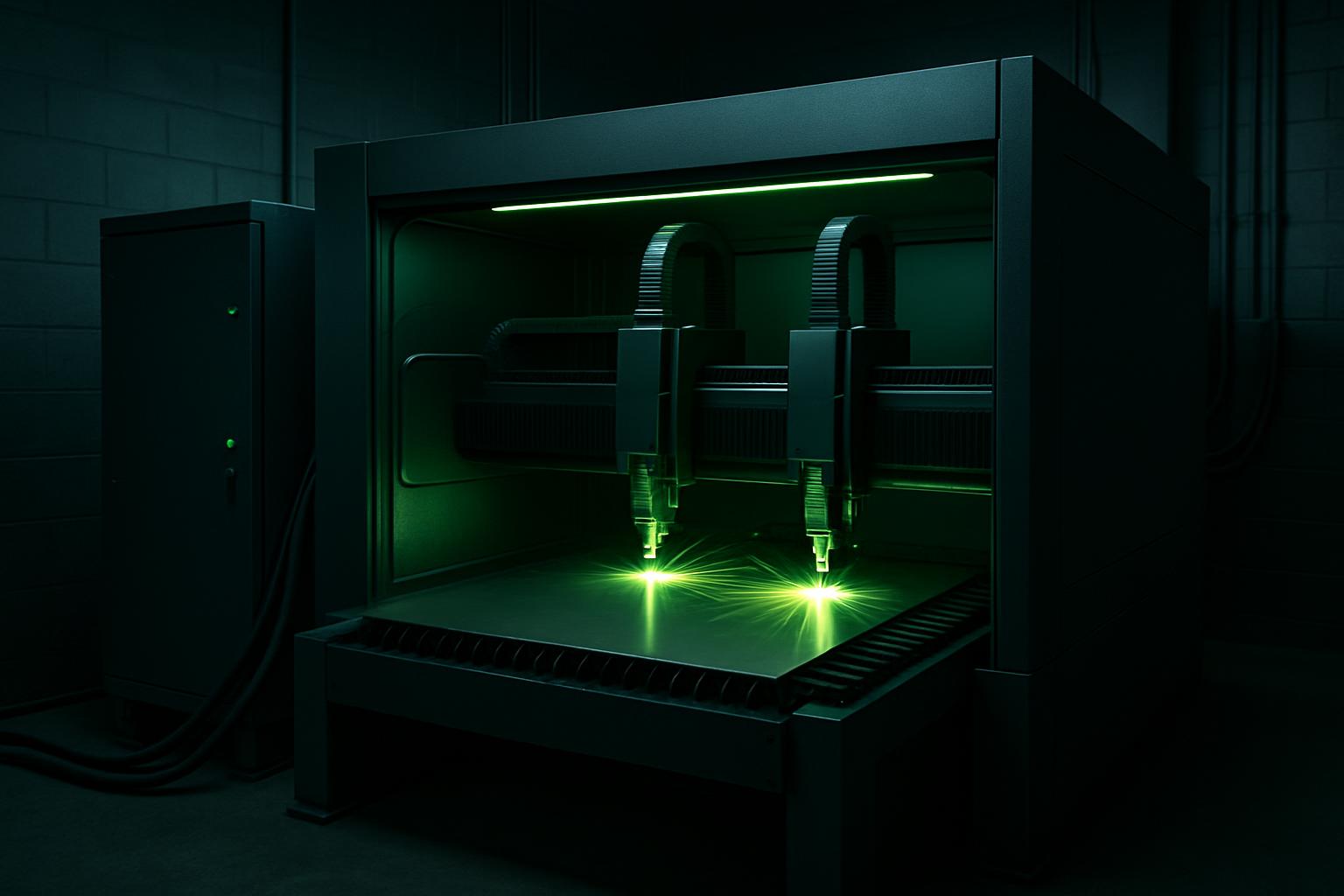
Dual head
DualHead Mark
Two marking heads on one cell for high-mix lines that need both flat and rotary marks without constant changeovers.
Explore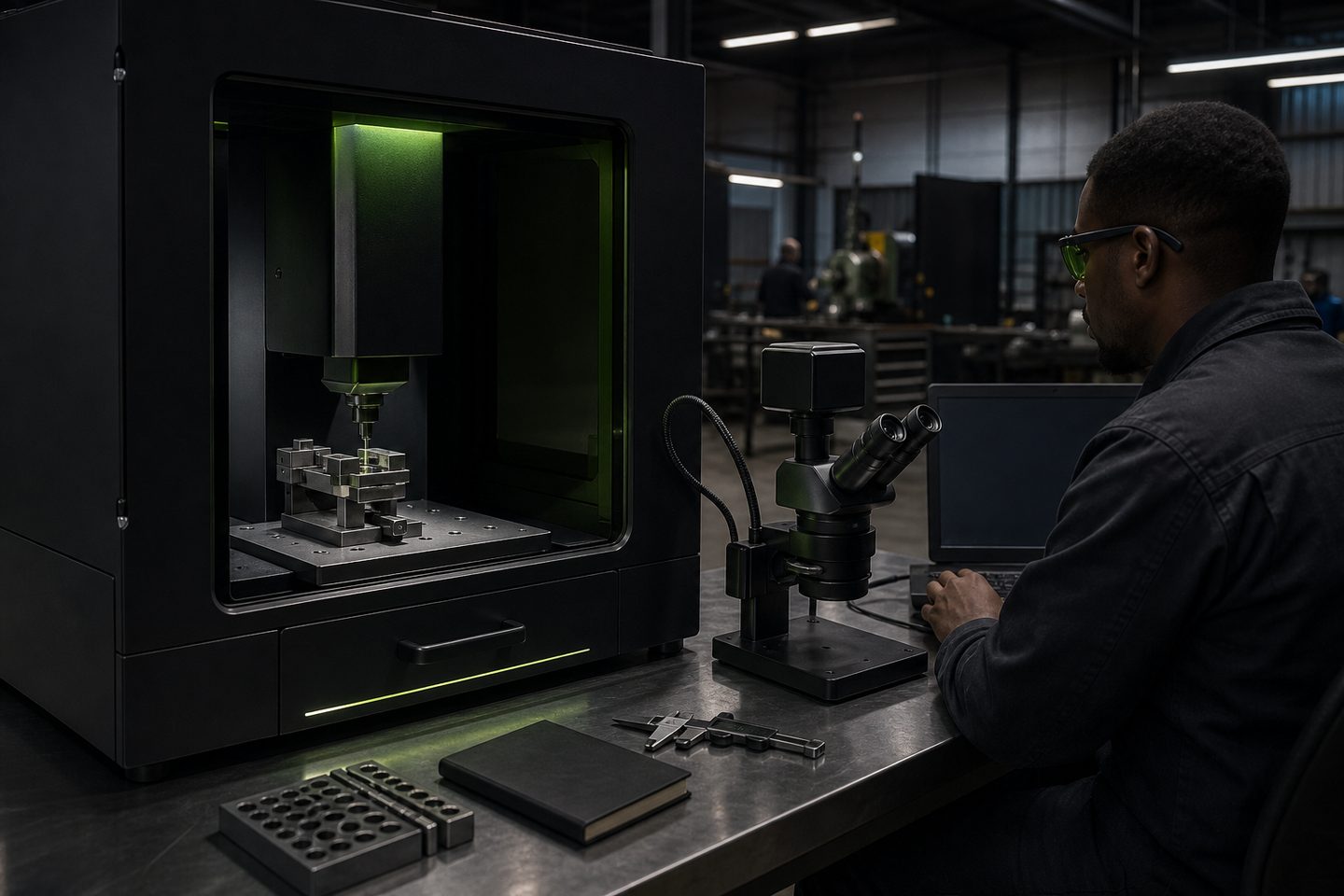
Precision micro
MicroMark Lab
Fine-feature fibre marking for medical, electronics, and jewellery work where character height and contrast are tight.
ExploreCommon parts and materials for serial marking jobs
Serial numbers, UIDs and QR codes are widely used on fabricated brackets, machine frames, stainless panels, tools, surgical instruments, and asset tags. In South Africa, most jobs we see are on mild steel, 304 or 316 stainless, aluminium, and branded electrical components. Mining, rail, and medical sectors often need permanent marks for compliance and traceability.
For parts that will be powder coated, exposed to solvents, or installed outdoors near the coast (such as pump housings and electrical boxes), only deep engraving or annealing marks survive the full life of the part. Paint ablation works for bare metal but does not last if the part sees abrasion or another finish down the line.
Choosing the right fibre marking system
For most serial and UID jobs on sheet steel or plate, the Mark Pro 30 is our standard cell: it handles everything from custom part numbers to QR codes and can do both surface and deep marks. Where you need to mark both flat plates and round components (like pipes or shafts) in the same workflow, DualHead Mark lets you switch between heads without manual changeover.
MicroMark Lab is the choice for fine-feature serials and data matrix codes on medical, electronics or jewellery work, where small mark size, high contrast and precise character formation matter. All three systems are open-frame and need correct laser eyewear and local extraction.
- Mark Pro 30: general flat and deep marking
- DualHead Mark: flat and rotary in one cell
- MicroMark Lab: micro and fine-feature codes
How a typical serial marking job runs
A serial marking job moves from drawing to finished part in a structured sequence. Most of the time, your drawing or sample defines where and how the mark must appear, and the data (serial string, UID or code) is supplied as a list or generated from a template.
We run test marks at Sunnyrock HQ to confirm contrast, depth and position, then set up the marking programme on your cell. After a first-article review and any needed tweaks, you can run the rest of the batch with confidence.
- Receive part drawing and serial/code data
- Choose mark type (engrave, anneal, ablate)
- Set up marking recipe and fixture
- Run test marks and review
- Adjust settings for contrast and depth
- Approve first article, then run production
Serial marking quality issues we see and how to avoid them
The most common problems are poor contrast on stainless, shallow marks that vanish after coating, and codes out of spec for scanners. These usually come from wrong mark type, incorrect focus, or using the wrong settings for the material or coating.
To avoid these, always pick the mark type suited to the end use: use deep engraving for parts that will be painted or coated, annealing for medical or food contact (where no material can be removed), and check contrast on the actual material batch. Keep the protective window clean and use the right extraction for fumes. If you see fading, blurring, or missed characters, stop and inspect optics and settings before running the full job.
What to send us for sample mark support
For a sample or setup run, send us a few spare parts or offcuts made from the actual material, plus the serial or UID data and a drawing or photo showing where the mark must go. If you need a QR or 2D code, let us know the code standard or supply sample data so we can generate and verify the code before marking.
Use our contact form to send your details and a description of the work. Our applications team will review the requirements, run the test at Sunnyrock HQ if needed, and send you marked samples or a video for approval.
- Actual part or offcut (not only a photo)
- Serial/UID data or code samples
- Drawing with mark position
- Any coating or finish details
- Your mark quality requirements
What our Fibre Laser customers say
Verified Google reviews