Beam notes
Codes that survive coating
Getting UID and QR codes to stay readable after powder coating or industrial washing takes careful marking choices. Here is what works best in South African shops.
Why code contrast fails after coating
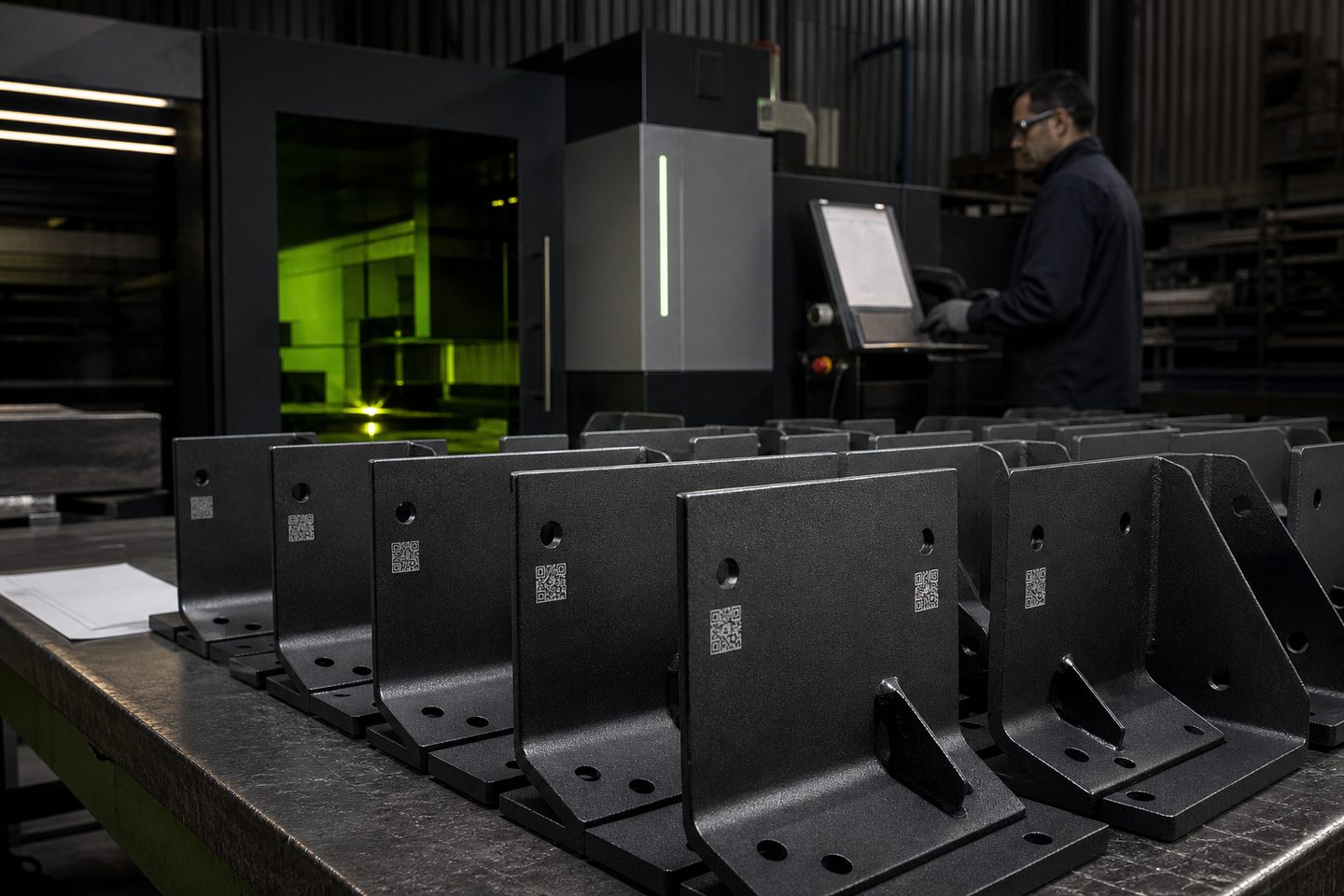
South African workshops often need UID or QR codes to survive not only the job but surface finishing as well. Powder coating, painting and caustic wash lines can all obscure or completely erase marks that looked fine before the part left the laser bench.
The result is rework or scrap when a code fails to scan at dispatch, in the field or on a medical line. Most marking faults come down to weak contrast, shallow marks or the wrong marking method for the job.
What has worked in practice
From what we have seen at our Sunnyrock sample bench and on client floors, the most reliable codes are either deeply engraved or created by ablating away coatings to expose the base metal. Annealing and surface etch marks tend to vanish under powder or paint, so we avoid these for anything that will be coated.
For powder coat, a deep engrave with our EngraveFab 50 or Mark Pro 30, going well below the surface roughness, keeps the code readable after the oven. For marking onto already-coated parts, ablating the coating with a crisp, high-contrast setting works if the base is still a scannable colour. Always check the code grade after the full finishing cycle.
A job that taught the lesson
One Johannesburg fabricator sent a batch of mild steel tags through powder coat, only to find their UID marks almost invisible. Their first attempt was a simple surface mark with the wrong gas and shallow depth.
After a consult, we switched them to a deeper engrave with a focus on clean edges, used nitrogen as assist on the stainless tags, and confirmed code readability after powder. That batch now passes scan every time, even under thick coating.
Steps to get good readable codes
Each shop floor and finish line is a bit different, but these steps are proven for getting UID and QR codes that survive coating and wash.
- Engrave codes to a depth well below the final surface, not only an etch
- Avoid annealed marks where the part will be coated or abraded
- Use assist gas and power settings that produce sharp, clean edges
- Test scan codes after the full finish, not only after marking
- For coated parts, ablate the top layer for contrast if the base metal allows
- Keep a reference tag for each batch to check scan grade after every process
When to ask for help
If your codes are failing after coating, or you need to qualify a marking method for traceability, just send us a message through our contact form. Attach a photo of the marked part and tell us your coating or wash process.
We run first-article tests at Sunnyrock and can advise on the right machine, settings and code format for your shop. Whether it is a routine UID mark or a medical-grade code, we are here to help you get it right the first time.