Beam notes
Mitres that fit on site
Mitre and fish-mouth cuts on tube and pipe only pay off if every joint fits on site, first time. Here’s how we back trailer and chassis yards to get it right.
Why mitres fail in the real world
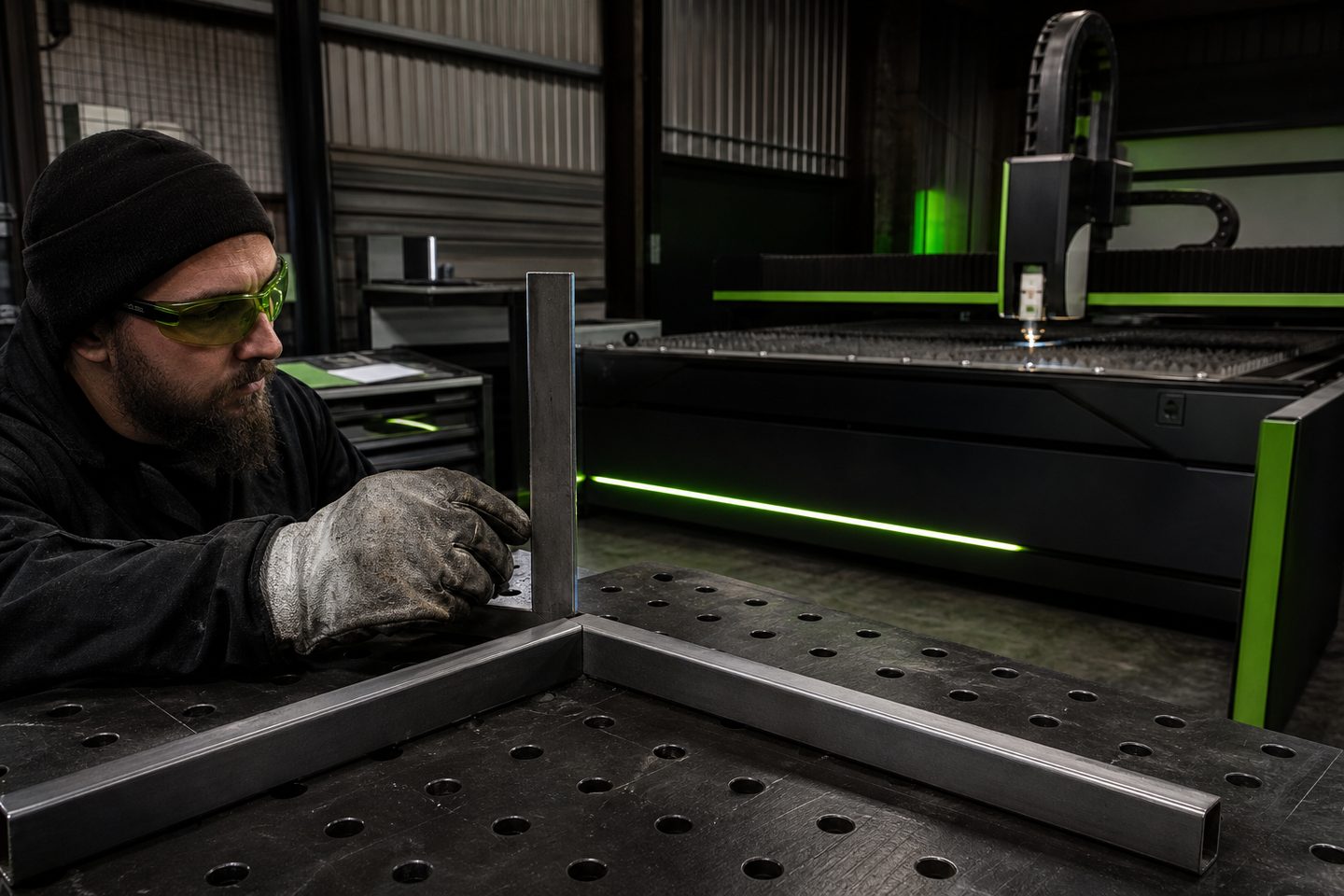
Anyone who has built a trailer frame knows how quickly a small mitre gap can become a major headache. If one fish-mouth is off by a couple of millimetres, you get out-of-square frames, extra weld fill, or field rework that wastes hours. For tube and chassis yards, the pressure is real: batch jobs, tight margins, and assembly crews who expect everything to slot together, not be fettled into place.
We see this especially when tubes are cut offsite and shipped out. By the time the job reaches the assembly yard, there’s no easy way to adjust a mitre that doesn’t match the rest of the nest. You cant always send it back to be recut, especially upcountry or after a power cut. The result is welding gaps, shimming, or, worst case, joints that won’t hold spec.
What we’ve learned setting up tube mitre cuts
At FibreLaser SA, we run first-article reviews for chassis and trailer makers who cut square, round and oval profiles on the TubeCut R8. Getting mitres right starts with real-world sample fits: we check every angle, look for witness marks and run test assemblies before a batch goes live. The main lessons: tube straightness matters as much as the laser setup, and even the best nest is only as good as the cut length calibration.
We always check that fixtures are clean, the v-blocks seat properly, and the rotary chuck has no play. Gas must be clean and dry, nitrogen gives the best finish on stainless, but dry compressed air is often fine for mild steel. Protective windows under the head need a daily check, especially in high-dust shops. A dirty window can scatter the beam and spoil the accuracy of your mitre cue.
Where a job taught us the value of pre-fit checks
One Gauteng workshop sent us a batch of 50 mm RHS frames for a utility trailer, asking why their mitres wouldn’t close up on site. The nests on their SheetNest Pro were fine, and the machine log from the TubeCut R8 looked normal. When we checked their first-article parts, we found a small slip, the operator had loaded half the tubes with the seam up and half seam down, so the mitre landings were slightly offset.
Once we matched seam orientation and ran a physical dry-fit at Sunnyrock, the joints closed up with no extra grinding. That job reminded us: even a tiny change in cut setup or tube orientation can throw off a day’s worth of field work.
How to avoid site fitment headaches
Fitting up on site starts with steps taken in the shop. Here’s our standard routine before any trailer or chassis batch leaves:
Always run a dry-fit of the first cut batch, assembling joints by hand on a flat bench. Mark tube seams to keep orientation consistent from cut to weld. Check the calibration of both length and rotary axes weekly, or after any major bump or adjustment. Clean fixtures and v-blocks before every run, as dust can shift the tube mid-cut. Inspect the protective window under the cutting head every shift for dust, oil film, or cracks. Store and transport cut tubes with spacers or padding to avoid knocks that distort ends. Use the correct assist gas for your material: dry air is often good enough for mild steel, but nitrogen is best for stainless to avoid oxide marks.
- Dry-fit assemblies before batch release
- Mark tube seam orientation
- Check length and rotary calibration weekly
- Clean fixtures and v-blocks daily
- Inspect the head window each shift
- Use spacers to protect cut ends
When to ask us for help
If you still have site fitment issues after checking your fixtures and calibration, or if you want us to review a nest or first-article part, send us a message through our contact form. The more detail you give, city, machine and a photo of the joint, the better we can help.
For complex mitre nests, custom fixtures, or tube types outside your normal runs, our applications team will review your setup at Sunnyrock or connect you with a specialist at your nearest showroom. Don’t let one small mistake ruin a full batch, we’re here to make sure your mitres fit on site, the first time.