Beam notes
Letters without rework
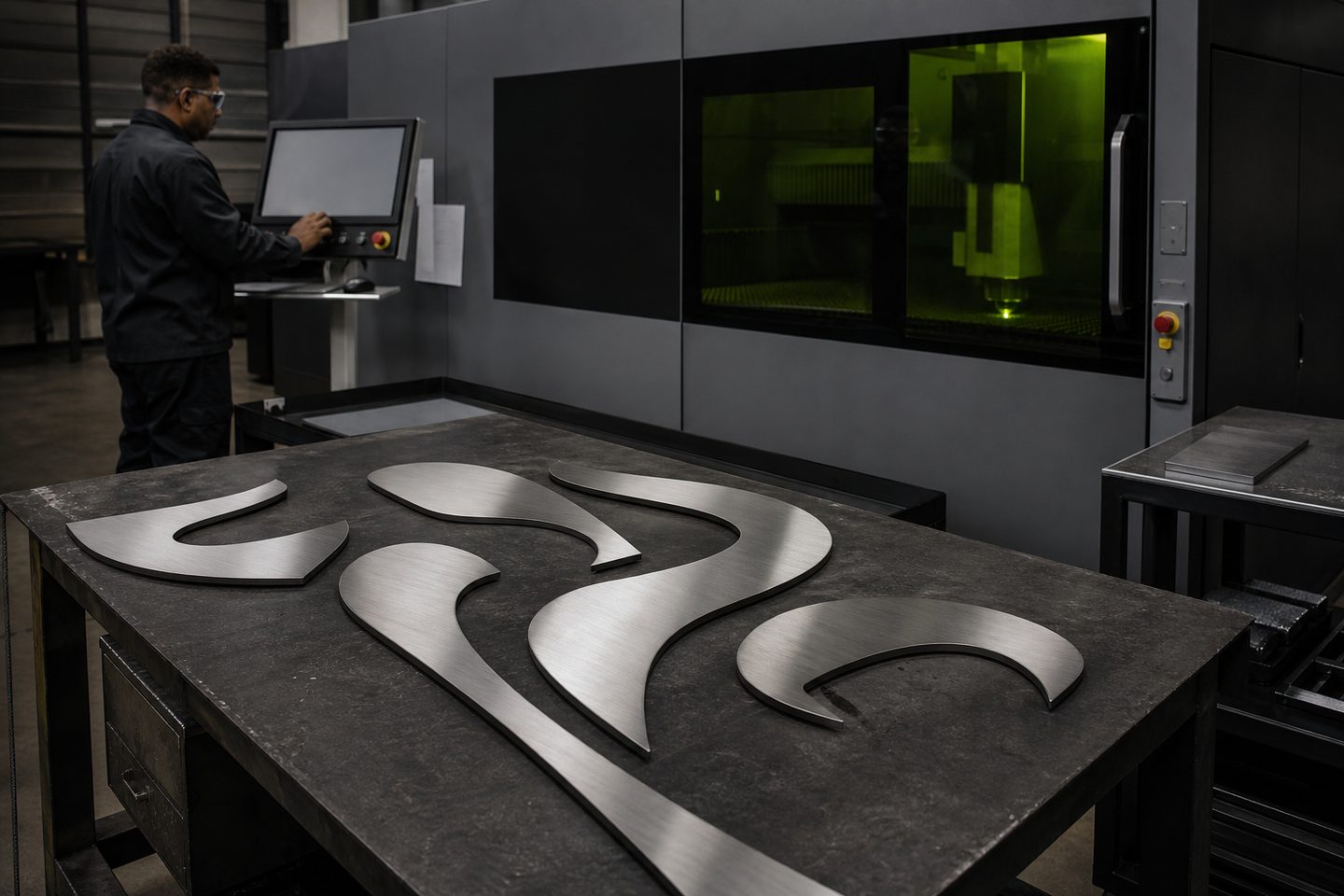
Laser-cut sign letters can warp or lose detail if the nest is wrong or the edge is rough. Here is how we keep clean letters that go straight to powder.
What ruins sign letters after cutting
Anyone running signage knows the pain: you cut a stack of aluminium or stainless letters, they look crisp on the bench, but as soon as they go for powder, the story changes. Edges warp, powder peels or pools at the bottom, or you find spatter baked into the finish. Suddenly your ‘ready’ letters need hours of hand work or re-cutting, and you lose time and margin.
This happens even with a good machine. The trouble usually starts in the nest, with poor tabbing, shared cuts, or a thin bridge that distorts under heat. Settings that work for big flat parts can leave fine letters stuck, bent or with ragged edges. Any spatter, burr or dross means powder won’t stick evenly. Once powder goes on, every flaw shows.
Our lessons on nests, machines and edge prep
Getting right-first-time letters is about the full sequence: how you nest, how you set your power and speed, and what assist gas you use. With the CutLine 1500 and SheetNest Pro, we’ve seen that tight, efficient nests are not always best for small letters, sometimes a looser nest avoids heat build-up or gives a better bridge position.
Oxygen is common for mild steel, but on stainless or aluminium, nitrogen or clean compressed air gives a much cleaner edge that takes powder well. Keep the optics clean and the protective window spotless. A dirty window dulls the beam and leaves a rougher edge. On thin sheet, too high a power or slow speed can harden burrs onto the cut, which the powder shows up. Rather run a bit faster with just enough power to get a clean drop.
One shop’s signage job that nearly fell apart
A client in Durban brought us letter sets for a hotel sign, cut on a previous system. Half were warped and the powder was flaking around the tabs. The local humidity didn’t help, but the main problem was the nest: tabs were too wide and too few, and the letters were packed so close that heat wasn’t escaping. With the right nest spacing, smaller tabs, and a switch to nitrogen, their next batch needed zero filing or buffing before powder.
Since then, they always run a low-fume, high speed pass for fine fonts, especially on 304 stainless. It saves them at least a day per sign, and their powder coaters now ask for repeat work.
Steps for letters that go straight to powder
After years of sign letter jobs, these are the steps we follow to keep rework off the bench:
- Use wider nest spacing on small letters to reduce heat build-up
- Set tabs thin and frequent, then test with a small run before full sheet
- Use nitrogen or clean dry air as assist gas for bright stainless and aluminium edges
- Check and clean the head window and nozzle before every run
- Run a quick edge check: if you feel a pronounced burr, adjust speed or height
- Never nest letter strokes too close: leave room for cooling
When to contact us for application advice
If your letter nests keep giving trouble, or your powder coaters are sending parts back, send us a message through our contact form. Include your city, the material, and if possible, a photo of your nest and the finished part.
We can help with SheetNest Pro setups, check your CutLine parameters, or review your fixture and assist gas choice. Our team has seen every kind of letter, from bulk retail runs to fine hotel signage, and we’re glad to review a sample at Sunnyrock HQ or by remote session.