Project
Rustenburg wear tags
In Rustenburg, a plant maintenance team needed permanent asset identification on wear parts that never leave site. The challenge was keeping tags readable despite heavy abrasion and dirt.
Related cut: mining wear parts

The plant and the tagging problem
At a mining site near Rustenburg, maintenance teams face constant turnover of wear parts. These parts rarely leave the plant, but every changeover needs a clear tag for tracking and maintenance logs. Old systems like paint pens, stamped plates or stick-on labels never lasted long under abrasive conditions. Serial numbers rubbed off, replacement tags got lost, and it was hard to prove which part was which when everything looked the same after a few months on the job.
The site manager wanted a better way to mark each asset with a unique code that would survive heat, vibration and daily cleaning. They needed something they could do on the shop floor without moving heavy parts to an admin office. Power supply and dust were both real concerns, they wanted a system that could travel to the work, not the other way round.
We brought in FieldMark portable fibre laser marking
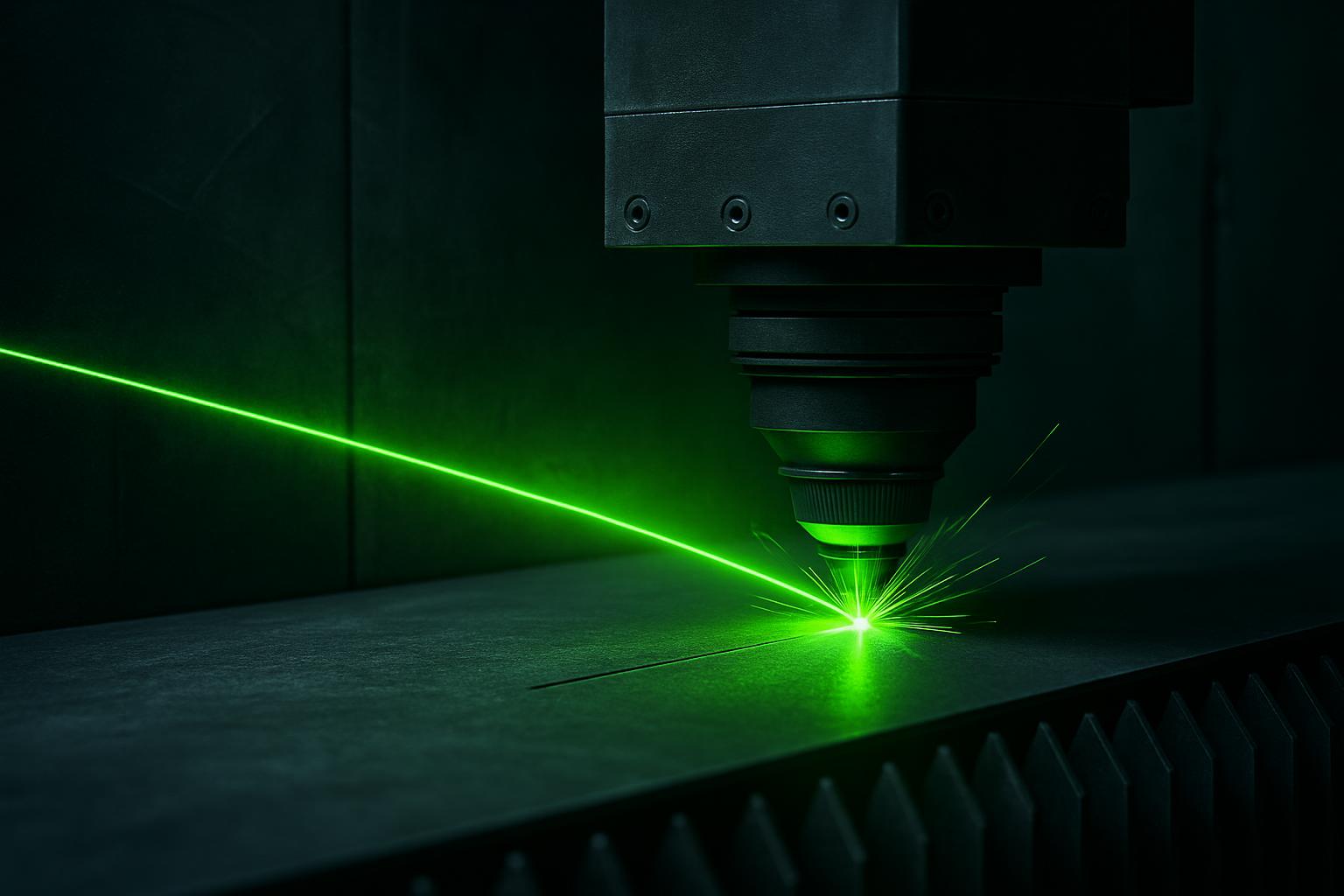
We recommended the FieldMark Portable kit for this job. It runs on a standard 230 V supply, and its lightweight marking head can be carried to the part in the field. The team set up a marking bench in a covered bay close to the main repair area. They started by testing different mark settings on offcuts from the same steel as the real wear parts. Our marking applications lead, Ms Firdous Bassier, worked with their supervisor to fine-tune depth and contrast so that each asset tag would stay readable after months of wear.
We also supported them in setting up a simple Data Matrix code system for direct part marking, making it easy to scan and log parts without manual entry. The FieldMark system's beam is Class 4 when uncovered, so they keep a set of certified laser safety glasses at the bay at all times and marked a clear safety zone on the floor.
A few months down the line
After a few production cycles, the plant team found that the fibre laser marks stayed visible even on the most handled parts. Unlike stickers or paint, the deep engraved codes did not wear away from impact or washing. The cleaning crew reported it was easy to wipe dirt off the tags and scan the Data Matrix code before each shift. The marking bay itself needed a quick tidy every week, as steel dust does collect around the equipment if you dont keep up with extraction and surface cleaning.
The only real snag was remembering to inspect the protective window on the marking head daily. A couple of times, a dirty window caused the marks to go faint until it was cleaned. Once the team added it to their morning checklist, this was sorted.
Points for other maintenance and mining workshops
If your workshop needs asset tags that last on site, a portable fibre laser marker like FieldMark works where labels, paints or stamps fail. Go for direct part marking if the parts never leave your yard. Test your marks on scrap from the same batch as your actual wear parts, local batch variations can change the contrast and durability.
Set up a fixed marking bay with clear safety controls, even if you move the kit around. Remember, fibre laser radiation at 1064 nm is invisible and dangerous, CO2 laser glasses will not protect you. Always use eyewear rated for fibre lasers and stick to your safety zone.
- Mark samples first to test contrast and depth
- Use correct laser safety glasses at all times
- Add protective window checks to daily tasks
- Set up local fume extraction for safe working
What our Fibre Laser customers say
Verified Google reviews