Beam notes
Tube clamps without crush
Thin wall RHS and pipe are easy to crush if the clamps are too hard or the pressure is wrong. Here’s what we do to protect your tube during cutting.
Why clamp crush is a real risk with thin wall tube
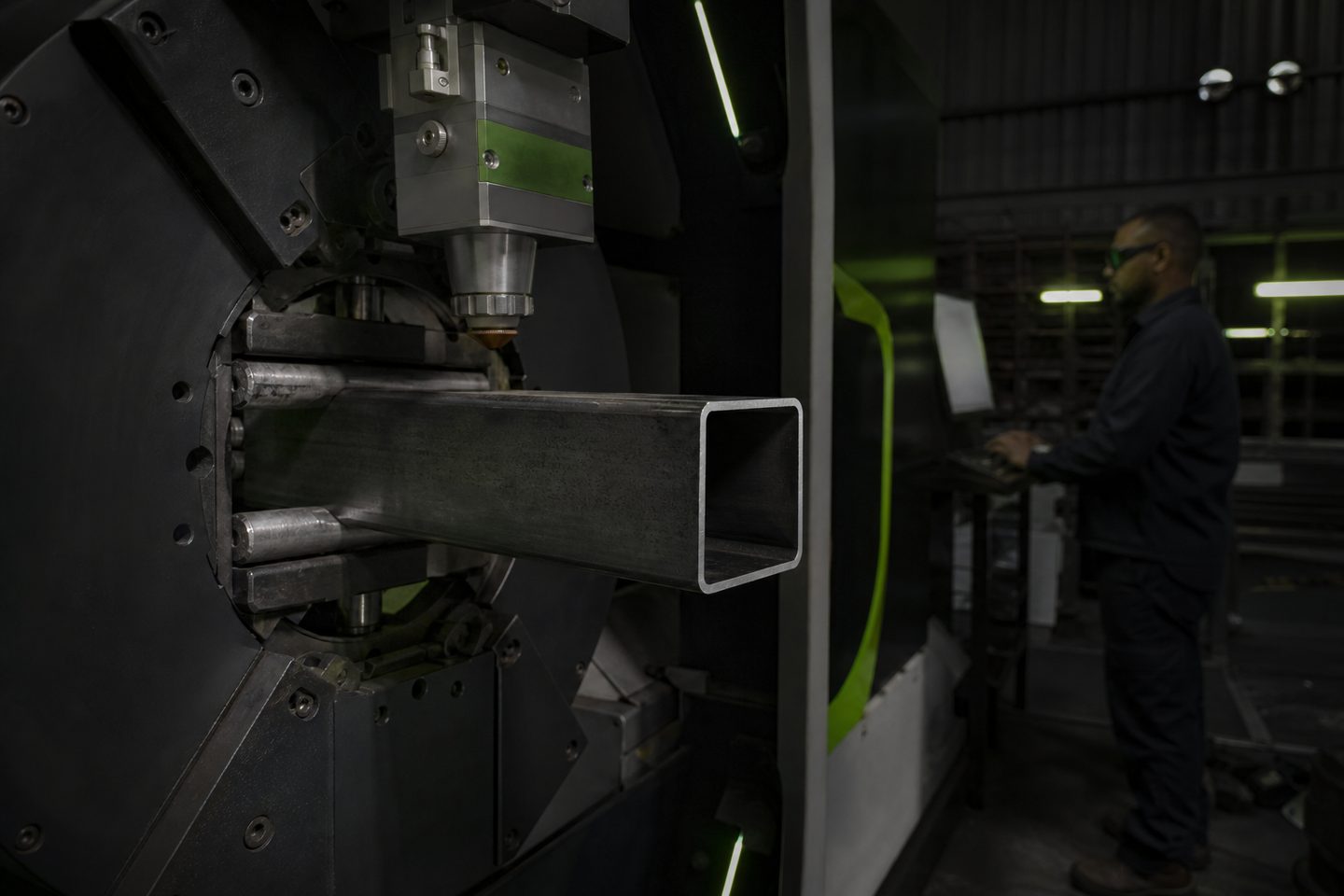
On the shop floor, thin wall RHS and pipe look strong enough, but it only takes a bit too much clamp force to leave a dent or a flat spot. This is a common problem, especially when cutting on rotary systems like the TubeCut R8, or when swapping between wall thicknesses during a short run.
Most tubes in South African yards are standard hot-rolled or pre-galv, with wall thicknesses that can range widely even in the same batch. If your clamp jaws are steel and the pressure is set for heavy section, your lighter tubes won’t last a single job without visible crush. Once a tube is deformed, it won’t fit clean in a chassis jig or bracket, and that means rework.
What works in practice for soft jaws and clamp force
Over the years, we’ve learned that the best way to protect thin wall is to use soft jaws. These are clamp inserts made from materials that spread force, like aluminium, tough nylon, or even layered polyurethane. They deform a little under pressure but return to shape, which helps hold the tube without biting.
For the TubeCut R8, we keep a set of soft jaws in the tool drawer. The trick is matching the jaw profile to the tube: round jaws for pipe, flat for RHS, and always checking for any burr or debris between the jaw and the tube. If your system uses pneumatic clamps, we recommend starting at the lowest force that just holds the tube steady, then working up only if you see movement during the cut. Always check the tube after a first clamp, before you start your real run.
A real job where soft jaws saved the part
One of our Gauteng customers runs light chassis work for small trailers, mostly 1.6 mm wall RHS. They were getting visible clamp flats after every batch, which made it hard to line up the parts in the assembly jig.
We made them a set of soft jaw covers from 6 mm high-density polyethylene, shaped to fit the RHS profile. They swapped these onto their TubeCut R8, dialled back the clamp pressure, and the flats disappeared. You could see the difference in the weld-up: everything seated with less fight, and scrap dropped straight away.
Steps to prevent clamp damage on thin wall tube
You can avoid tube crush with a few basic checks and setup changes on your laser cutting cell. Here’s what we recommend before you run light wall tube:
- Fit soft jaw inserts matched to your tube profile (nylon, aluminium, HDPE or polyurethane)
- Clean jaws and tube faces so no grit or burrs transfer force unevenly
- Start with the lowest clamp pressure that still holds the tube steady for the cut
- Test clamp on a short offcut, check for any flats or marks before the real job
- For rotary chucks, confirm the tube sits true and does not slip at full rotation speed
- Keep spare jaw sets for different tube shapes and sizes in your tool drawer
When to ask us for help through our contact form
If you have new tube profiles, ultra-thin wall material, or see unexplained marking on your parts after cutting, send us a message through our contact form. We can help set up custom jaws, review your clamp settings and check your TubeCut R8 or other system for correct alignment.
Bring us a sample to Sunnyrock HQ or your nearest bay, and we will do a first-article review with you, so your next run lands clean and square.