Beam notes
Thin chassis without warp
Thin stainless or aluminium chassis can warp or bow during laser cutting, especially in South African shops without climate control. Here’s how we keep them flat and true.
Why thin chassis tend to warp in the shop
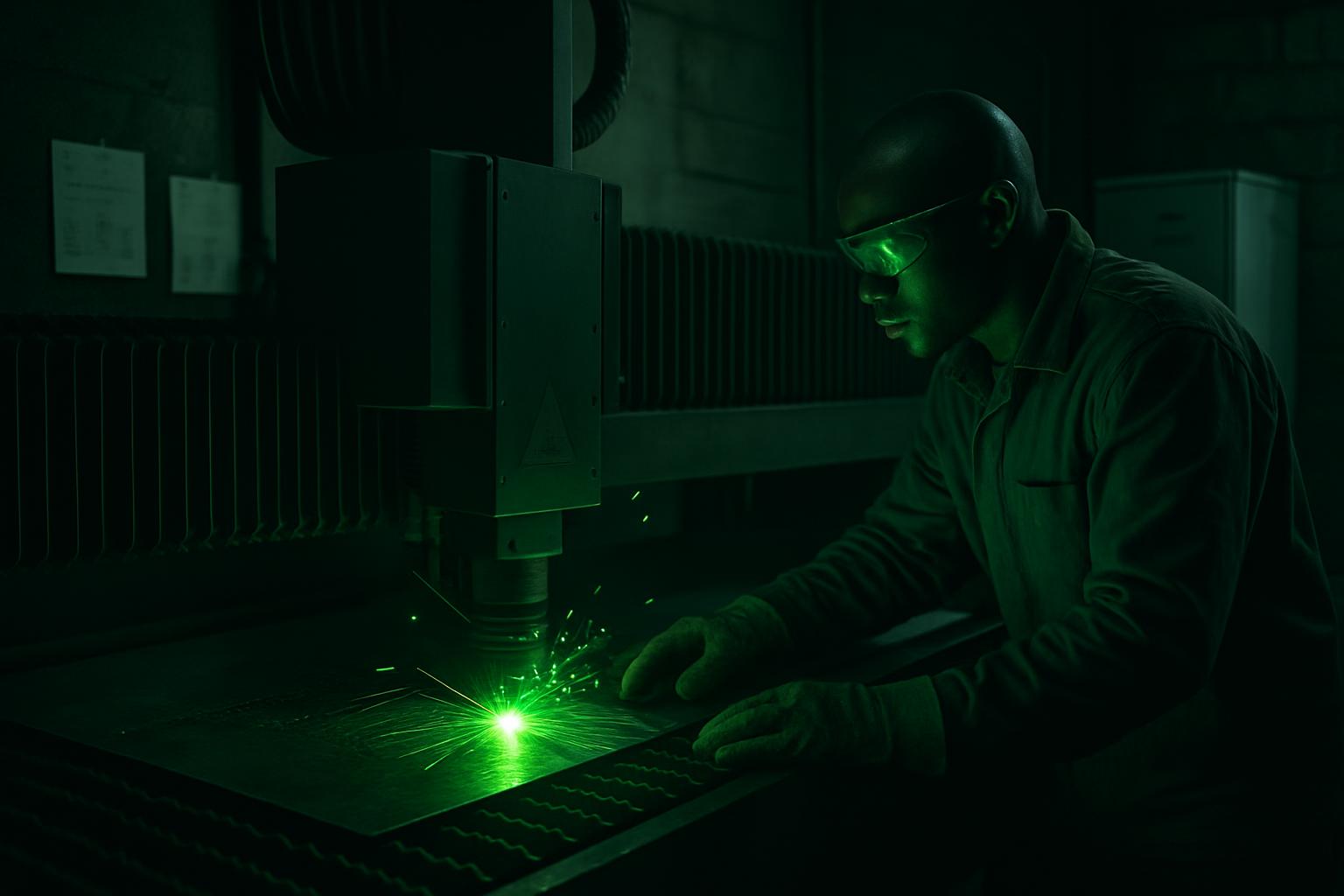
Anyone making electronics chassis or trays from 1 mm or thinner sheet knows the problem: even with a good laser, parts sometimes leave the table with a bow or twist. Steel merchants often deliver sheets that are already stressed from rolling or slitting. Once you cut a tight nest of rectangles or covers, those stresses suddenly release. If the shop is warm, or the aircon is off, warping can be even worse.
Warping shows up in post-cut assembly too. You’ll see gaps when fastening panels, or the whole chassis rocks on the bench. This isn't just fiddly for assembly, it can actually ruin your fit on a PCB or enclosure.
What we have learned on the CutLine cell
On the CutLine 1500, we have seen that settings and nest layout make a big difference. Cutting small parts too close together lets heat build up on the sheet. If we need the maximum yield, we add micro-joints to keep parts together until after the cut, then break them out and deburr. This stops small pieces from shifting or tipping and keeps the whole nest flatter.
For thin stainless, running nitrogen as the assist gas at the right pressure gives a clean, cool edge. Oxygen can overheat thin sheet and adds to distortion. Keeping the protective window spotless and checking the beam focus every morning helps a lot, its easy to forget after a few jobs, but a dirty or fogged window throws off the cut and brings in more heat than you want.
A real example from the Highveld
We had a batch job from a Pretoria shop making 1 mm 304 stainless covers. Their old process left every part slightly curved and made them rework dozens by hand. The first trial on our CutLine, with their nest and our tweaks, kept the whole set of chassis pieces flat enough to go straight to bending.
What made the difference was using micro-joints, wider spacing between parts, and one simple change: raising the pierce height by a touch. This cut down on dross sticking to the bottom and stopped the sheet from buckling during tight corners. They now run the same recipe every time, even with different batches of sheet.
Steps to avoid warp and keep chassis flat
If you want flat, ready-to-bend chassis from thin sheet, follow these steps in your workshop. They work on mild steel, stainless and aluminium, as long as you adjust for material type.
- Add micro-joints to keep individual parts attached to the nest during cutting
- Increase part spacing slightly in the nest to reduce heat build-up
- Use nitrogen assist gas for stainless and aluminium, at the lowest pressure for a clean cut
- Check and clean the protective window under the cutting head daily
- Test with a single sheet first if using new stock or from a different merchant
- Let cut nests cool on the table before handling to avoid sudden warping
When to get in touch for support
If your thin parts keep warping even after careful setup, or if you’re seeing new problems after a batch of material, its time to get hands-on help. Sometimes the answer is as simple as a change in the nest, sometimes its a hidden issue with the optics or the gas supply.
Send us a message through our contact form with your shop’s location, the material and thickness you run, and how far the last parts warped. We’re always willing to review a first article at Sunnyrock or give practical advice in person or online.