
Mark Pro 30 specs
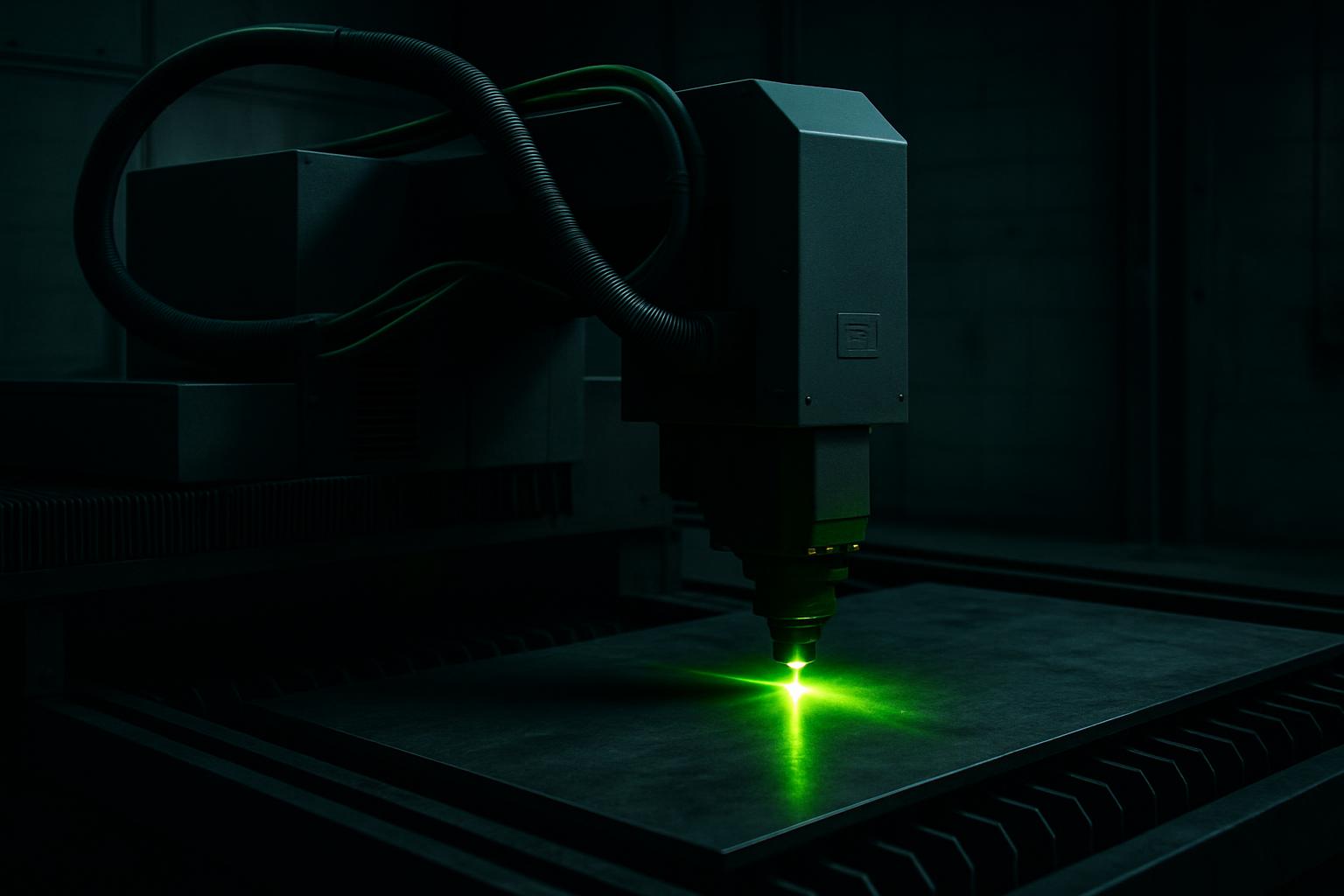
Mark Pro 30 is a 30W fibre marking cell with a 200 × 200 mm work area, ideal for mixed serial, logo, and UID jobs on flat and rotary parts.
| Source | 30W fibre |
|---|---|
| Work area | 200 × 200 mm class |
| Best for | Serials, logos, UID |
| Duty | Mixed job-shop days |
| Fixtures | Flat + rotary kits |
| Support | Sunnyrock HQ and showroom bays |
Use our contact form to request a pack for your setup.
Also see beam notes and projects.
How the Mark Pro 30 spec lines matter on real jobs
A 30W fibre source gives Mark Pro 30 the right beam for marking metals like stainless, aluminium, tool steel, and hard plastics. The 200 × 200 mm class work area suits most tags, tools, panels and parts, letting you mark multiple items in a single setup or cover large logos in one pass. Mixed job-shop duty means you can run a variety of parts, some serials, some deep engravings, some logos, across a shift without needing special cooling or long resets.
The flat and rotary fixture kits let you swap between marking flat plates and round items like shafts or pipes. Its worth clamping small parts properly, as a loose fixture can spoil focus and clarity, especially on repeat serials or 2D codes. If you plan to mark curved or odd-shaped parts, bring samples to Sunnyrock HQ and we’ll check the required focus range with you.
What the spec leaves out and how to test your parts
Specs don’t tell you how a mark will look on your specific material or coating. Stainless, anodised aluminium, and tool steel all take marks differently. Mark Pro 30 can handle both deep engraving and annealing, but the result will depend on your alloy and surface prep. If you need a precise logo shade, or data codes that scan reliably after passivation or painting, ask for a sample run on your own stock.
Bring a few actual parts or cut-offs to Sunnyrock or any of the showroom bays. Ms Firdous Bassier can help select the best parameters and fixture for your needs. For medical, food or electronics work, we’ll check the mark depth, contrast and code grade to match your process and site standards.
Site and utilities to plan before installation
Make space for a bench or table near a 230 V single-phase socket. The Mark Pro 30 needs stable power and shouldn’t share a plug with heavy machinery. Local exhaust extraction is needed to capture fume and fine dust from metals and coatings. If you’ll mark galvanised, painted, or stainless parts, plan for an extractor with a HEPA or suitable fume filter.
You’ll also need to store your laser safety eyewear with the correct optical density for fibre lasers, CO2 glasses won’t protect here. Keep the work area tidy, with space for your fixtures and parts. If you use compressed air for part cooling, check that it’s clean and dry.
- 230 V single-phase socket
- Laser-rated eyewear for fibre wavelength
- Bench or table space
- Local exhaust extraction
- Safe storage for fixtures and marked parts
Questions to ask before comparing marking cell quotes
Can the machine mark your thinnest and hardest materials with the required contrast and depth? Make sure you get sample marks, not only photos. Does it come with both flat and rotary fixtures, or are these extras? Ask if the system is licensed for use under SAHPRA and comes with the right interlocks and guarding.
Check what training and support are available at Sunnyrock HQ or your nearest showroom bay. Find out how easy it is to clean the protective window and swap fixtures. Dont forget to ask about site safety, including eyewear, OHS Act requirements, and how the enclosure is rated.
What our Fibre Laser customers say
Verified Google reviews