
DualHead Mark specs
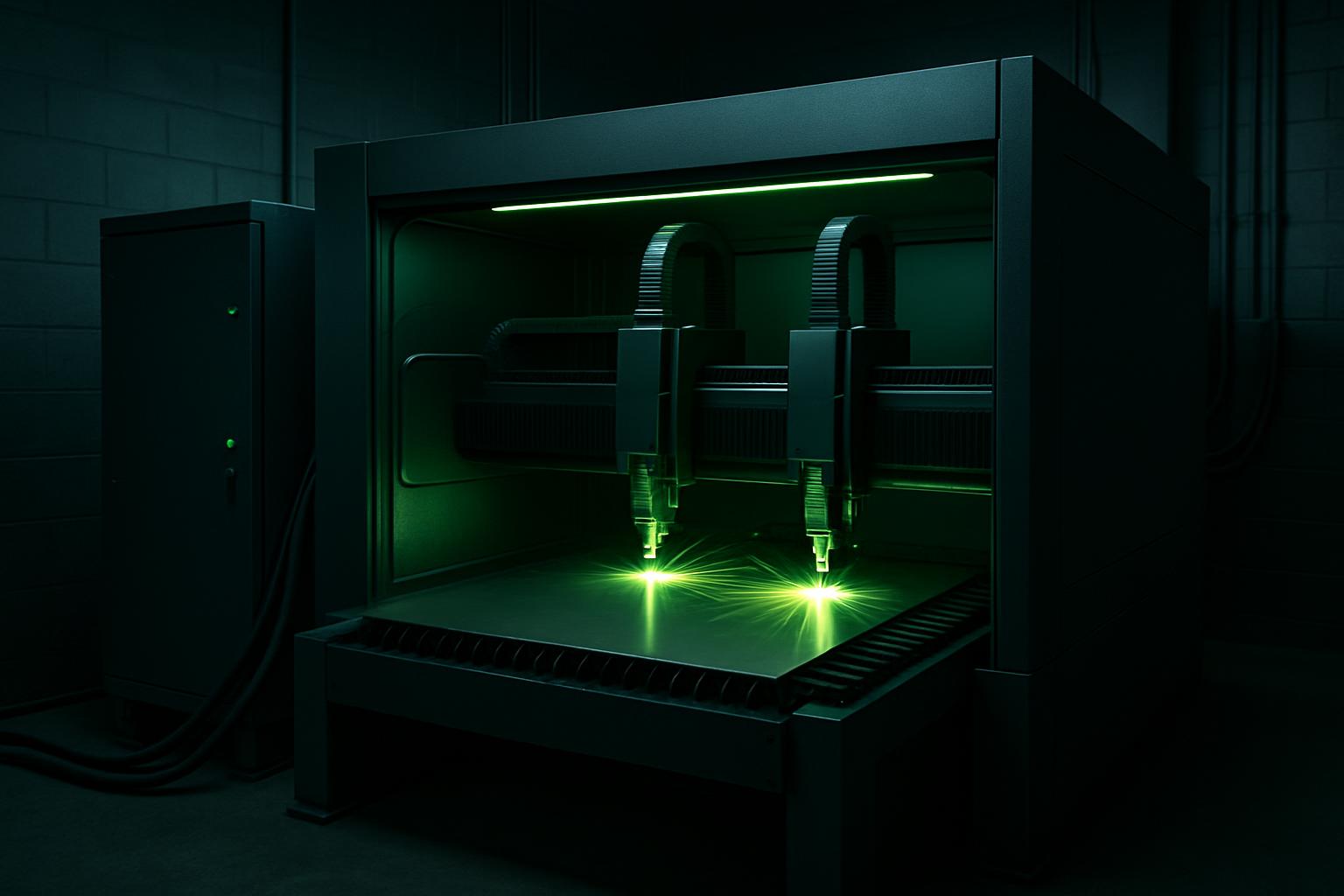
DualHead Mark is built for high-mix marking lines needing both flat and rotary capability in one cell. It uses dual fibre heads with shared recipe libraries and real-world line cues.
| Heads | Dual fibre |
|---|---|
| Mode | Flat + rotary |
| Best for | High-mix lines |
| Recipes | Shared library |
| Line | Takt cues |
| Support | Sunnyrock HQ |
Use our contact form to request a pack for your setup.
Also see beam notes and projects.
What each DualHead Mark spec means for your parts
Dual fibre heads let you mark both flat parts and rotary items like shafts or rings without changing setups. This saves time in high-mix production, especially for lines that jump between different product types.
Shared recipe libraries mean you can store, refine and reuse settings across both heads. Marking jobs stay consistent between runs, and operators can load the right parameters quickly, useful when the same line handles everything from asset tags to branded housings.
Cycle-time cues and line prompts give real, floor-level guidance for each job. Operators get reminders on job changes, fixturing and marking sequences, keeping fast change-over runs less prone to error.
What the specs do not tell you
Specs offer a baseline, but to see how DualHead Mark fits your parts, you need sample runs on your own material. Items like plastics, coated metals or curved surfaces can behave differently than flat test coupons.
Our applications team at Sunnyrock HQ runs first-article reviews on your samples. You will see the real mark depth, contrast and code readability, not only the catalogue claims, before any decision.
Site and utilities to plan for
DualHead Mark is best sited in a clean, dust-controlled area with space for both flat and rotary marking and part handling. Good lighting and a clear workbench help with setup and inspections.
Local exhaust extraction is needed for fume and fine particulate, especially when marking coated or galvanised items. Protect your team and keep to occupational exposure limits.
The machine runs on 230 V single phase power. Fixed wiring must be signed off with a Certificate of Compliance under SANS 10142-1. Provide stable supply and surge protection for reliable operation.
- 230 V single phase power outlet and supply CoC
- Local exhaust extraction and filtration
- Clear bench with space for rotary and flat work
- Controlled access for laser safety
- Upright storage for assist gas cylinders if used
Questions to ask before you compare marking quotes
How quickly can you swap from flat to rotary marking, and does your line need both every shift, or only for certain runs? Look for real cycle time data, not only headline features.
Do you need deep, permanent engraving, high-contrast annealing, or mainly code and logo marking? Check on your own parts with your finish and coatings. Some marks look good on test plates but fade or blend in after powder coating.
Ask about recipe transfer, operator training, and first-article setup support, especially for high-mix lines and multiple shifts. Confirm what support is included from Sunnyrock HQ, and if you can see the cell running in person.
What our Fibre Laser customers say
Verified Google reviews