Resource
Assist gas checklist
This checklist is for CutLine operators and shift leads to confirm oxygen or nitrogen supply, safety and settings before starting a cutting shift.
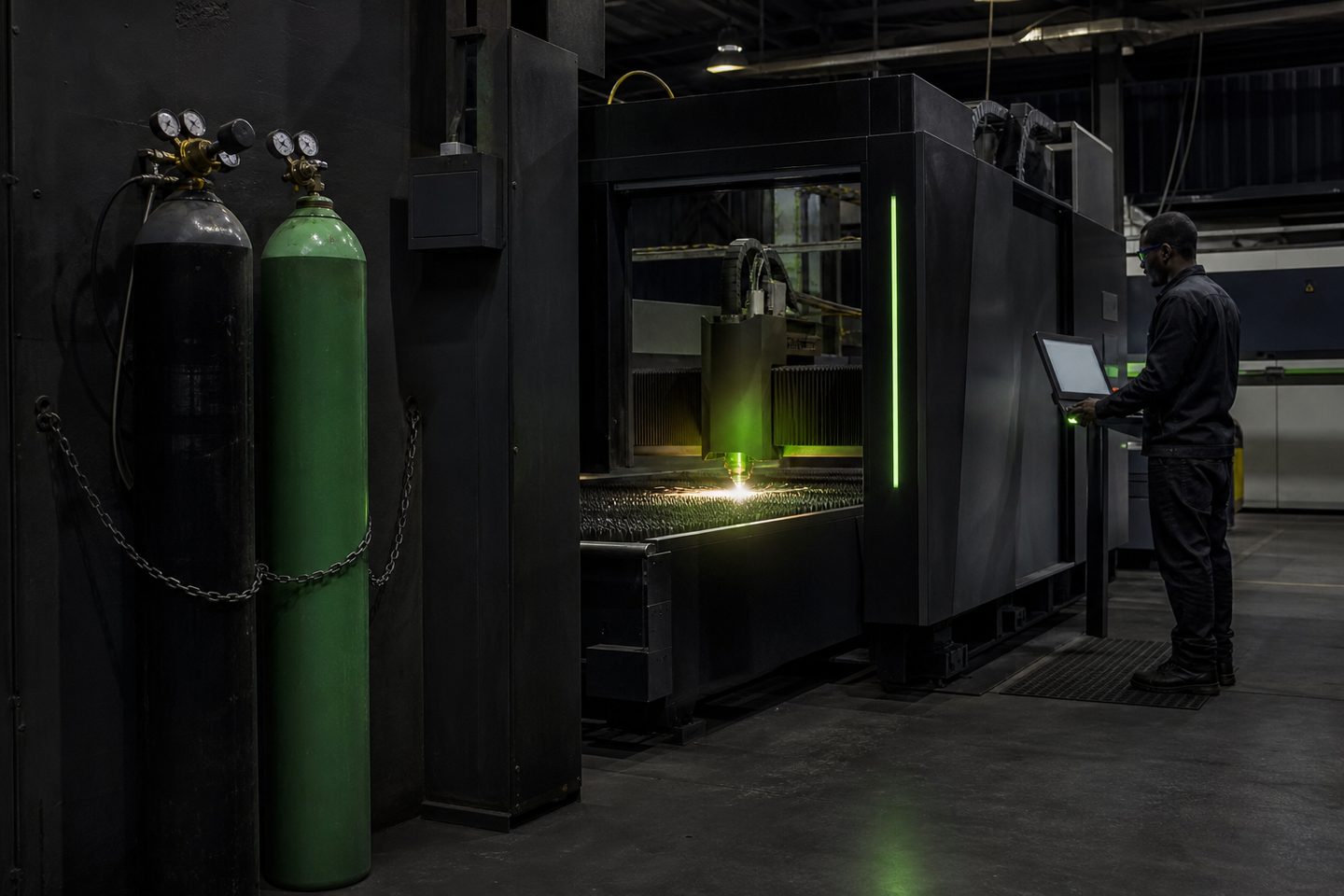
Who needs the assist gas checklist and when to use it
The assist gas checklist helps CutLine operators and shop-floor supervisors make sure oxygen or nitrogen supply is safe, correct and ready before starting a sheet cutting shift. It covers what to confirm and what to record so nothing is missed at shift change, especially with multiple teams or if your workshop runs long hours.
Operators use the checklist at the start of each shift, after changing a gas cylinder, or when swapping from oxygen to nitrogen. It works as a daily record and reminder, and is best kept right at the machine console for easy access.
Checklist items and completion steps
The checklist is a printed sheet with tick boxes, blanks for readings, and a comments space. The operator or shift lead must tick off each item as its checked, write in actual gas pressure and bottle number, and note any leaks or damage. Dont leave any field blank, if something is not applicable for your shift, write NA.
If you need more sheets or an updated version, send us a message through our contact form and we'll send you the latest printable pack. Each checklist stays with the shift lead until the end of the shift, then goes to the supervisor or file as a record.
- Check gas type (O2 or N2) matches the job
- Confirm cylinder is chained upright
- Record starting cylinder pressure
- Inspect hoses and regulators for leaks
- Check assist gas filter and dry air trap
- Confirm correct assist gas pressure on the console
How to use the checklist on the shop floor
Keep the completed checklist visible at the CutLine console during the shift. If any problem is found, such as a pressure drop, regulator fault or filter alarm, pause cutting and log the issue in the comments. Alert your supervisor straight away before restarting work.
If gas runs low or you swap a cylinder mid-shift, fill in a new checklist for the replacement and note the change. At end of shift, file the sheet or hand it to the supervisor. Having these records helps prove compliance with OHS Act, chemical agent regulations and keeps your production flowing safely.